Skip to product information
1 of 7

Construction Site Custom Yard Signs

Construction Site Custom Yard Signs

Rush Delivery Best Value Free Design
⛊ Secure Checkout ✓✓ 100% Custom Guarantee 💲 No Hidden Fee or Upsells
  • American Express
  • Apple Pay
  • Google Pay
  • PayPal
  • Discover
  • Mastercard
  • Visa
  • Shop Pay
  • Diners Club
  • Venmo

Design Assistance with Every Order Badge

Need help or a custom request? Chat with us or email hello@printdrill.com — we go above and beyond to make sure you’re taken care of.

Free Design Proofing: We check every file for print quality & alignment. If needed, we’ll reach out to fix issues before printing.

View full details

Custom Yard Signs for Construction Sites

Custom yard signs designed for construction sites: clear, high-impact signage for Site ID signs, developer yard signs, construction hazard signs, job site branding, and subcontractor lawn signs. These weather-ready, custom-printed signs help contractors, developers, and site managers communicate project identity, safety messages, and contact information from day one. Easy to place around perimeters, entrances, and staging areas, they make it simple to mark responsibilities, identify contractors on-site, and reinforce brand presence across the job site.

Page title

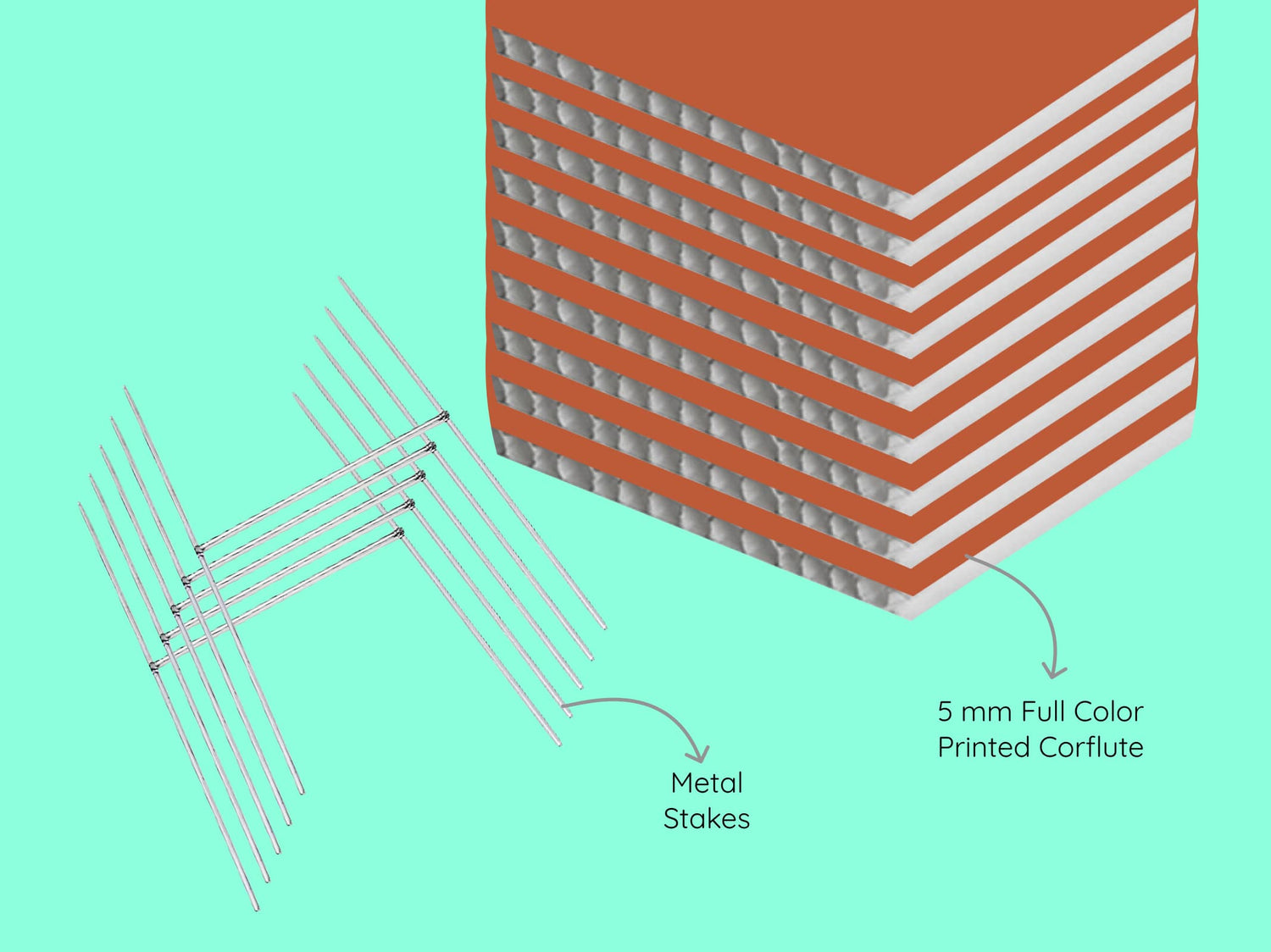
Yard Sign Stakes and Printed Corflute Sheets

Versatile Usage of Yard Signs

Yard signs serve a wide range of promotional purposes, offering high visibility in outdoor spaces. Here's how they can be used:

Common Uses of Yard Signs:

  • Political Campaigns: Promote candidates or issues in public spaces.
  • Real Estate Listings: Advertise properties for sale or rent.
  • Event Announcements: Direct guests to weddings, parties, or community events.
  • Business Services Promotion: Showcase local businesses and services.
  • Informational Signage: Guide visitors or display important information for public awareness.

Why Choose PRINTDRILL Yard Signs?

  • Durability & Weather Resistance: Made from 5mm Corflute, our signs withstand outdoor elements.
  • Vibrant Full-Color Printing: High-definition graphics that remain sharp and bright.
  • Customizable Options: Single- or double-sided, with reflective and HIP reflective options.
  • Easy Installation: Display with wire stakes for effortless setup.
  • Cost-Effective Advertising: Long-lasting quality with great value for money.

Types of Yard Signs: Choose the Best for Your Needs

When selecting the right yard sign for your business or event, consider your environment, visibility needs, and the durability required. PrintDrill offers three distinct types of yard signs, each suited to different situations.

Printed Yard Signs:

  • Ideal For: Daytime use, outdoor promotions, event announcements, and real estate ads.
  • Features: Made from durable 5mm Corflute material, these signs are lightweight, weather-resistant, and available in vibrant, full-color UV printing. They’re perfect for grabbing attention in high-traffic areas.
  • Best Use: If you need versatile and cost-effective signage for daytime visibility, these standard printed yard signs are a great option.

Reflective Yard Signs:

  • Ideal For: Enhanced visibility during both day and night.
  • Features: Built with a reflective film over the sturdy Corflute base, these signs glow brightly when exposed to light, making them visible even in low-light or nighttime conditions.
  • Best Use: Opt for reflective yard signs if your advertising needs extend into the evening, or if your signs will be placed in high-traffic areas where headlights can catch them.

HIP Reflective Yard Signs:

  • Ideal For: Maximum visibility in high-traffic, roadside, or low-light environments.
  • Features: Made with a highly reflective HIP (High-Intensity Prismatic) film, these signs provide superior brightness and visibility. Paired with robust 5mm Corflute, they are designed for long-lasting use and to stand out in extreme outdoor conditions.
  • Best Use: Choose HIP reflective signs for critical visibility, especially along roadsides or for 24/7 outdoor advertising where clarity is essential at all hours.

Which Yard Sign is Right for You?

  • If your sign will primarily be used in well-lit, daytime settings, Printed Yard Signs provide excellent value and impact.
  • For advertising that needs to be seen at night or in low-light conditions, Reflective Yard Signs are a great choice to ensure your message is visible.
  • For roadside ads or high-traffic areas where maximum visibility is crucial day or night, HIP Reflective Yard Signsoffer the best performance.

Collapsible content

Yard Sign Photo

How to Order?

Explore the most convenient way to order Signage and Print products online.

Step 1: Customize Your Product

Choose from material types, sizes, finishing options, and extras like lamination. Unsure? Our pre-selected options work for most needs, but feel free to adjust based on your preferences.

Step 2: Graphic Design Options

Upload your own design, use our templates, or let our designers create something for you based on your instructions.

Step 3: Upload Files Later (Optional)

If your design isn't ready, no worries! You can place your order now and upload the design later.

Step 4: Proofing & Approval

We provide free proofing to ensure everything looks perfect. You'll approve the final proof before production starts.

Product Specifications

Common Specifications:

  • Material: Corflute (5 mm thickness)
  • Durability: Weather-resistant and suitable for outdoor use
  • Printing Technology: Full Color, 600 DPI, UV-resistant printing for long-lasting vibrancy
  • Size Variance: +/- 3mm tolerance

Full Color Printed Yard Signs:

  • Graphic Weight: 890 GSM
  • Printing Type: Direct printing on the Corflute substrate

Reflective Yard Signs:

  • Material Composition: Corflute with Reflective Film
  • Graphic Weight: 1090 GSM
  • Printing Type: Reflective film printed and applied on the Corflute sheet

HIP Reflective Yard Signs:

  • Material Composition: Corflute with HIP (High-Intensity Prismatic) Reflective Film
  • Graphic Weight: 1200 GSM
  • Printing Type: HIP Reflective film printed and applied on the Corflute sheet

Question & Answers

FAQs for Construction Site Custom Yard Signs

Q: What types of messages are suitable for construction yard signs?

A: Common messages include Site ID signs with project and contractor details, developer yard signs for marketing and phase identification, construction hazard signs for safety alerts, job site branding, and subcontractor lawn signs for trade identification.

Q: Can I use these signs outdoors on an active job site?

A: Yes. These custom yard signs are intended for outdoor, temporary use on construction sites. Regular inspection and replacement are recommended for signs exposed to prolonged weathering.

Q: How do I place signs so they are visible to workers and visitors?

A: Place signs at main and secondary entrances, along perimeter fences, near staging areas, and at points where pedestrian and vehicle traffic approaches the site. Mounting at eye level and angling signs toward approach lines improves visibility.

Q: Are there size options appropriate for different site locations?

A: Yes. Select a size suited to the intended location—smaller signs for close-range lawn placements and larger signs for street-facing or perimeter visibility. Choose a size that balances visibility and portability for your needs.

Q: Can I include my company logo and custom colors?

A: You can customize signage with logos, project names, colors, and contact information to reflect your job site branding and project identity. Keep designs high-contrast and simple for legibility.

Q: Will these signs withstand wind and rain?

A: Yard signs are suitable for typical outdoor conditions. Proper mounting and placement reduce the risk of wind-related movement. Signs exposed to prolonged or severe weather should be inspected and replaced when necessary.

Q: How are yard signs typically mounted on a construction site?

A: Common mounting methods include wire stakes, frames, fence attachments, and temporary posts. Choose a mounting option appropriate for the sign location and ground conditions, and secure signs so they do not obstruct equipment sightlines.

Q: Can I order signs for multiple trades and phases?

A: Yes. Custom signs are practical for ordering different messages for multiple trades, phases, or project areas, making it easier to update identification and safety information as the job progresses.

Q: How do I ensure sign legibility at a distance?

A: Use large, bold fonts, high-contrast color combinations, and minimal text. Prioritize essential information and logos to keep the message clear from typical viewing distances for your placement.

Q: Are there any limitations I should expect with temporary yard signage?

A: Temporary yard signs are designed for short- to medium-term use. They may show wear from prolonged exposure to sun, wind, and construction activity. Inspect signs regularly and plan for replacements when fading, tearing, or damage occurs.

Q: Can these signs be re-used on future projects?

A: Reuse depends on the condition of the sign and whether the messaging still applies. Signs in good condition can be redeployed for similar temporary needs, while damaged or outdated signs should be replaced.

Q: What information should I include on a construction hazard sign?

A: Prioritize the hazard type (e.g., "Keep Out," "Hard Hat Area"), required PPE, and any critical access restrictions. Use simple language and consider a recognizable icon to support quick comprehension.

Q: How can I order multiple signs with different messages?

A: When placing a multi-message order, prepare clear files or text for each unique sign. Organize the order by quantity and message so that production and fulfillment match your intended deployment plan.

Q: Do I need permits to place signs along public roadways?

A: Local regulations vary. Check municipal and transportation authority rules before placing signs on public right-of-way or city-controlled property. Signs placed on private property typically follow site-owner approvals.

Q: How should I maintain signs on an active construction site?

A: Regularly inspect signs for dirt, damage, or fading; clean as needed; secure loose mountings; and schedule replacements for signs that no longer provide clear communication.

Collapsible content

More info on Construction Site Custom Yard Signs

Why custom yard signs work for construction sites

Construction sites are dynamic, high-traffic environments that need durable, visible signage to communicate ownership, safety, and logistics. Custom yard signs offer a cost-effective way to display Site ID signs, developer yard signs, construction hazard signs, job site branding, and subcontractor lawn signs at key points around a project. They are compact, portable, and simple to deploy, making them ideal for temporary and phased projects where signage needs change over time.

Key benefits for contractors and developers

  • Clear on-site identification: Use Site ID signs and developer yard signs to show project ownership and permit information so visitors and inspectors find the right location quickly.
  • Improved safety communication: Post construction hazard signs at entrances and along access routes to remind workers and visitors of site hazards and required PPE, reducing confusion and improving compliance.
  • Professional job site branding: Maintain a consistent public presence with job site branding that reinforces company reputation to neighbors, investors, and prospective buyers.
  • Flexible subcontractor marking: Subcontractor lawn signs let you label who is working on which portion of the site, simplifying coordination and accountability between trades.
  • Quick installation and updates: Signs are portable and simple to move or replace as site phases progress—use them for staging areas, temporary access routes, or changing safety instructions.
  • Cost-effective communication: Compared with permanent signage, custom yard signs provide a lower-cost option that can be updated frequently as project needs evolve.
  • Visible at a distance: Properly designed yard signs increase visibility from public roads and site approaches, helping direct traffic and advertise the project.

Typical construction site use cases

Construction projects use yard signs across many common scenarios:

  • Perimeter identification: Site ID signs at fence lines and site entrances to communicate the developer, contractor, and primary contact details.
  • Phase and lot marking: Developer yard signs identifying model homes, sales offices, or phase boundaries on residential and commercial developments.
  • Hazard notification: Construction hazard signs near trenches, heavy equipment zones, or confined-space access points to highlight risks and required PPE.
  • Directional and traffic control: Signs marking temporary routes for delivery trucks, employee parking, and pedestrian access to reduce site congestion.
  • Subcontractor identification: Subcontractor lawn signs at specific trades’ work areas to clarify responsibilities and help inspectors or clients locate crews.
  • Permits and inspection points: Signs indicating inspection points, permit posting areas, and temporary offices on larger projects.

Customization and branding options

Custom yard signs allow you to present project information and branding clearly. Typical customization elements that help construction teams include:

  • Custom layouts and logos: Include company logos, project names, and contact information to reinforce identity and ensure quick recognition.
  • Clear safety messaging: Use bold headings and concise copy for construction hazard signs to communicate rules and warnings without clutter.
  • High-contrast design: Choose color combinations and fonts that remain legible from a distance, especially for street-facing signs and access points.
  • Variable sizes and orientations: Select sizes that suit fence lines, posts, entrances, or lawn placement to make sure messages are proportionate and visible.
  • Single- or double-sided options: Position signs so messages are visible from multiple angles where needed on busy sites.

Installation and placement guidance

Place yard signs at strategic points: main entrances, secondary access routes, high-traffic pedestrian areas, and along public-facing perimeters. For best visibility, mount signs at eye level for pedestrians and angled toward approaching vehicle sightlines for road-facing placements. Keep signs clear of heavy equipment paths and ensure they do not obstruct sightlines for equipment operators or drivers.

Environmental considerations and expected performance

Yard signs for construction use are intended for typical outdoor conditions encountered on job sites. They are suitable for temporary and phased projects, where signs are moved or replaced as work progresses. To maintain legibility, inspect signs periodically for dirt buildup or damage and replace signs that become torn, excessively faded, or otherwise compromised by prolonged exposure. Avoid using temporary yard signage in extreme, prolonged exposure scenarios unless the chosen sign material and mounting hardware are rated for those conditions.

Design best practices for construction signage

For effective Site ID signs, developer yard signs, construction hazard signs, job site branding, and subcontractor lawn signs, follow these design guidelines:

  • Keep messaging concise: Use short phrases and large text for important information like company name, contact, and hazard warnings.
  • Use clear icons: Standard safety icons and pictograms help communicate hazards quickly to a diverse workforce.
  • Prioritize contrast and readability: Dark text on a light background or vice versa improves readability at distance.
  • Include essential contact info: Add a single phone number or website for quick reporting or inquiries rather than multiple contacts that clutter the layout.

Buying with confidence for your construction projects

Custom yard signs provide practical, flexible signage that supports safety, site identification, and professional presentation across construction projects. Choose designs that prioritize clarity, concise messaging, and proper placement to maximize their effectiveness. Regular inspection and timely replacement will keep your job site communications current and visible throughout each project phase.

Looking for our standard options? View our main Custom Yard Signs page here.