Skip to product information
1 of 7

Business Cards for Graphic Designers

Business Cards for Graphic Designers

Product Key Features:

  • Available in various thicknesses and finishes for enhanced feel and durability
  • Gloss and matte finish options for vibrant or classic designs
  • High-quality print for detailed, professional appearance
Rush Delivery Best Value Free Design
Replacement Guarantee
any Print/Hwd Issue
Delivery Guarantee
Delivery Guarantee
before your Event
Free Designing and Proofing
Free Designing & Proofing
before Production
Trusted by Exhibitors
Trusted by 250+ exhibitors
across USA

Design Assistance with Every Order Badge

Need help, a custom request, or a specific budget in mind? Email us, we’ll go above and beyond to make it work for you. hello@printdrill.com

View full details
Our Products in Action.
Kudos to our amazing Customers 💙

Business Cards for Graphic Designers

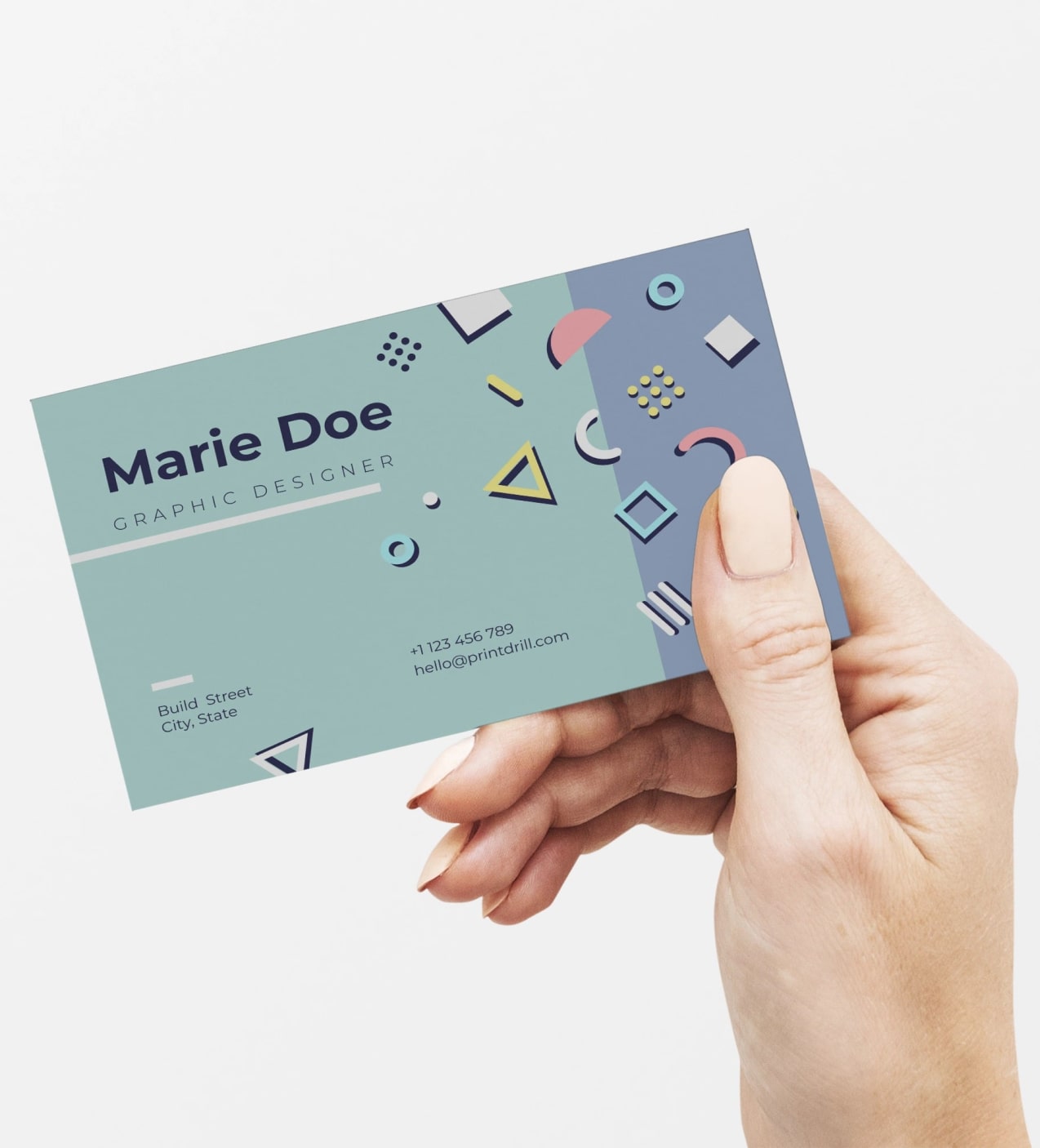
Custom business cards crafted for graphic designers who need a compact, tangible extension of their portfolio and brand. These cards are ideal for creative designer cards, minimalist designer cards, and high-end aesthetic cards that communicate your visual language at client meetings, networking events, and portfolio drops. Use them as portfolio link cards with QR codes or short URLs, or as a refined touchpoint for design agency branding. Fast to order and easy to customize, these business cards help you leave a memorable, professional impression without distracting from your work.

Looking for general-purpose Business Card?

If you’re evaluating options, it’s worth exploring our standard version of the Custom Business Card here. View our main Business Cards page here.

Page title

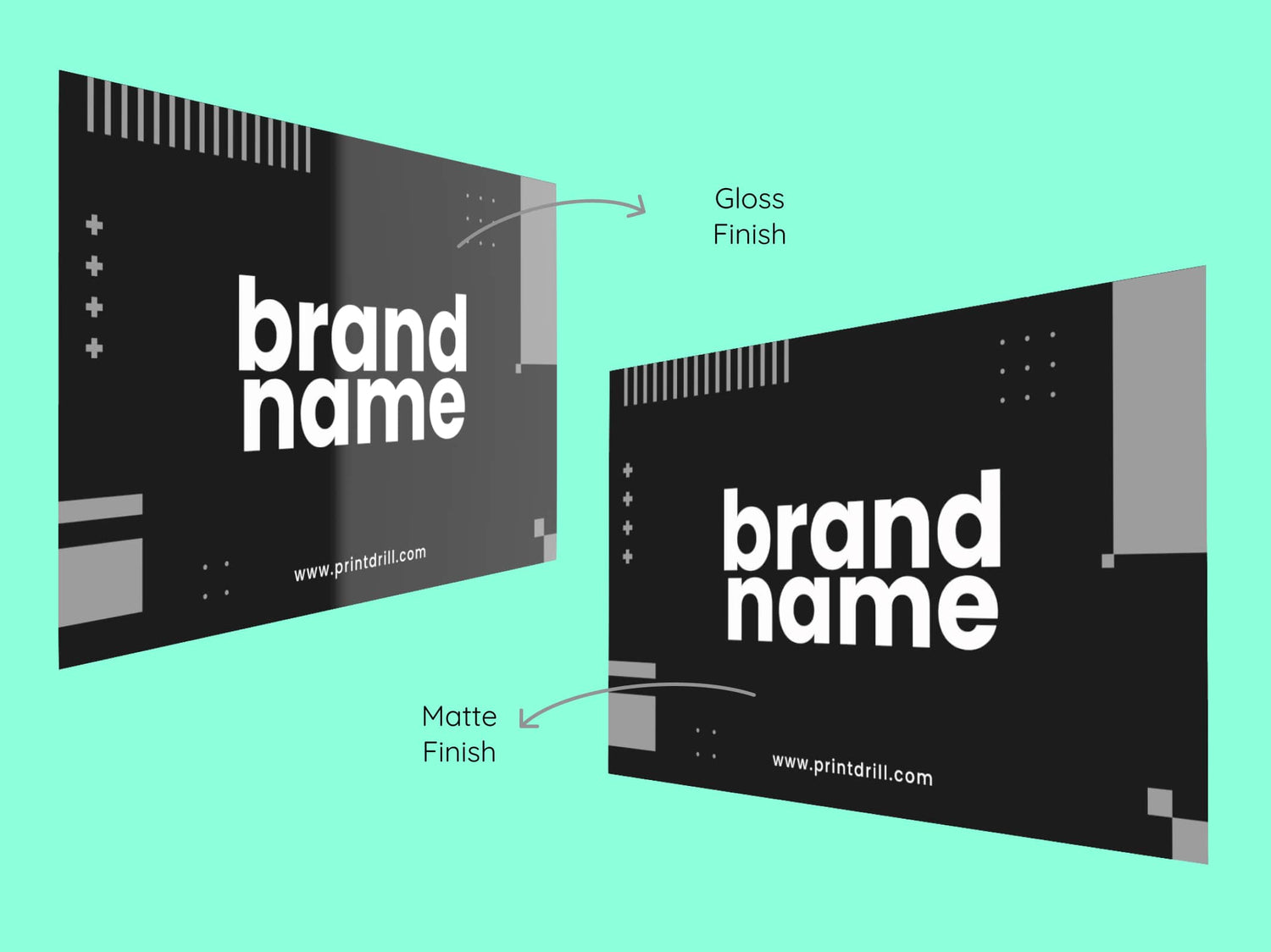
Gloss Finish Visiting Cards Vs Matte Finish Visiting Cards

Gloss Finish Vs Matte Finish

Color Vibrancy

  • Gloss: Enhances color vibrancy, perfect for photo-heavy designs.
  • Matte: Colors are softer and slightly muted, offering a subtle look.

Durability

  • Gloss: Highly durable, resistant to bending, folding, and moisture.
  • Matte: Less durable, more prone to bending and damage.

* Durability depends on the thickness (pt) of the card.

Readability

  • Gloss: Can cause glare under certain lighting, affecting readability.
  • Matte: Non-reflective surface ensures easy readability in all lighting.

Professional Look

  • Gloss: Shiny and eye-catching, but can be perceived as flashy.
  • Matte: Clean, modern, and professional look, ideal for formal use.

Fingerprint Visibility

  • Gloss: Prone to showing fingerprints and smudges.
  • Matte: Resistant to fingerprints and smudges.

Writing Surface

  • Gloss: Difficult to write on due to the smooth, coated surface.
  • Matte: Easy to write on with a pen or marker.

Protection

  • Gloss: Offers better protection from moisture and wear.
  • Matte: Colors may fade slightly over time, depending on the material quality.
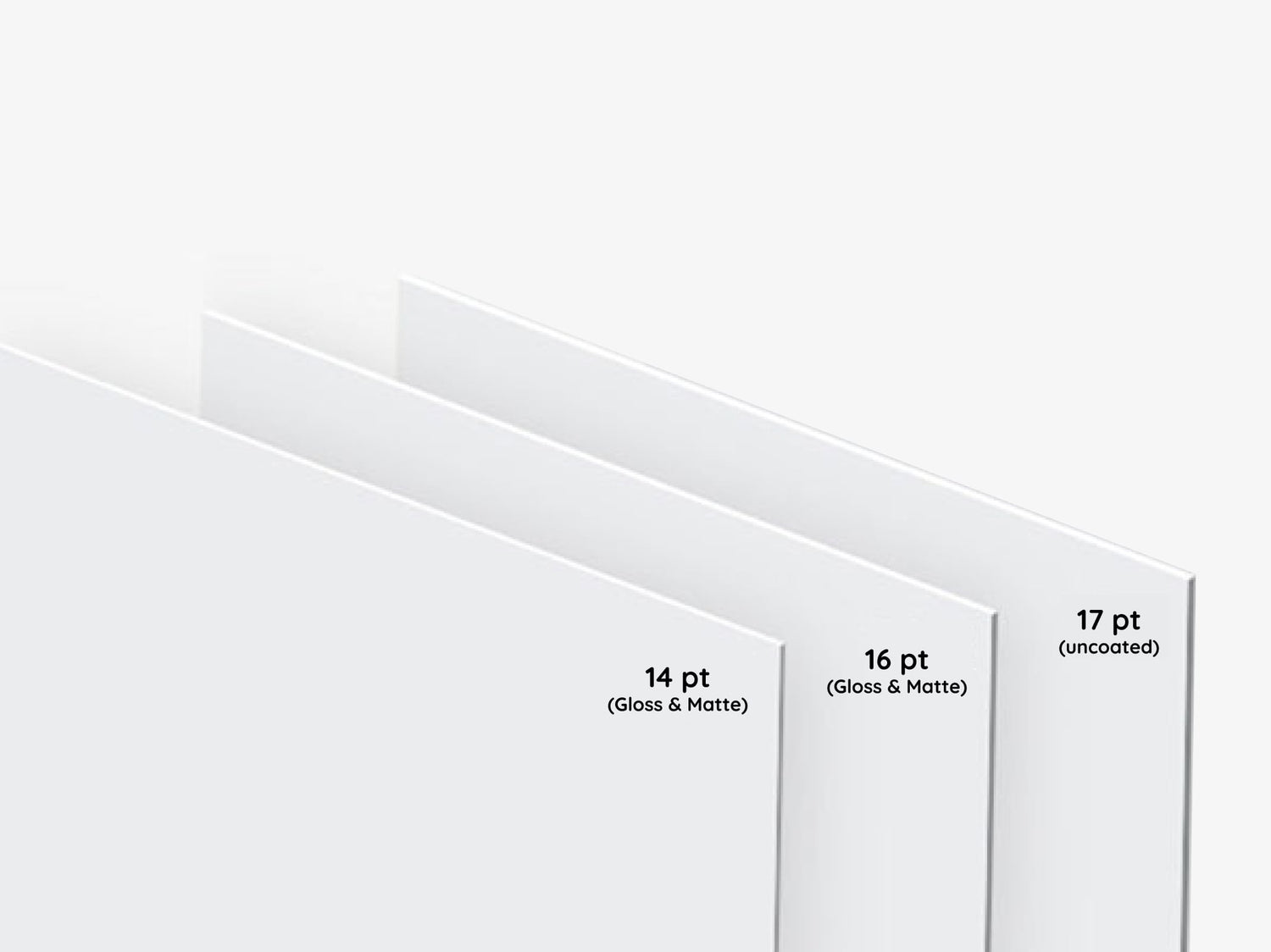
Business Card Paper Thickness

Choosing the Right Paper Thickness for Your Business Cards

14 pt Paper

  • Popular standard for business cards
  • Thinner and more flexible than 16 pt
  • Rigid enough to avoid bending or flopping
  • Affordable and great for mass distribution
  • Ideal for handing out large quantities at events

16 pt Paper

  • Slightly thicker and heavier than 14 pt
  • More durable, sturdy feel
  • Premium and substantial impression
  • Great for high-level meetings and impressing clients
  • Less likely to bend or crease

Uncoated 17 pt Paper

  • Heaviest of the three, with a luxurious feel
  • Uncoated surface, ideal for writing
  • Tactile, natural, or artisanal appearance
  • Best for brands aiming for a premium or unique aesthetic
  • More durable and thicker, lasting longer in use

Collapsible content

Premium Finish Business Cards

Product Specifications

Standard 14pt Gloss Finish:

  • Glossy finish enhances color vibrancy.
  • Sourced from sustainable materials.

Standard 14pt Matte Finish:

  • Non-reflective matte surface for a classic, elegant look.
  • Better writability compared to gloss.

Premium 16pt Gloss Finish:

  • Thicker, ultra-stiff cardstock with a high sheen for vivid colors.
  • Ideal for more premium, standout designs.

Premium 16pt Matte Finish:

  • Thick, durable cardstock with a smooth, professional matte finish.
  • Offers a more substantial, refined feel.

Premium Plus 17pt Uncoated:

  • Thickest option with a natural, uncoated texture for a luxurious touch.

How to Order?

Explore the most convenient way to order Signage and Print products online.

Step 1: Customize Your Product

Choose from material types, sizes, finishing options, and extras like lamination. Unsure? Our pre-selected options work for most needs, but feel free to adjust based on your preferences.

Step 2: Graphic Design Options

Upload your own design, use our templates, or let our designers create something for you based on your instructions.

Step 3: Upload Files Later (Optional)

If your design isn't ready, no worries! You can place your order now and upload the design later.

Step 4: Proofing & Approval

We provide free proofing to ensure everything looks perfect. You'll approve the final proof before production starts.

Question & Answers

FAQs for Business Cards for Graphic Designers

Q: What file formats do you accept for business card artwork?

A: We accept print‑ready files commonly used by designers—high-resolution PDFs exported from your design application. Ensure fonts are outlined or embedded and images are high resolution.

Q: Can I include a QR code or short URL to my portfolio?

A: Yes. Including a QR code or a short, memorable URL is a practical way to convert physical exchanges into portfolio visits. Test the code at card size to ensure it scans reliably.

Q: How should I set up bleed and safe area?

A: Include bleed around the design and keep logos and important text within a safe margin away from the edges to avoid accidental cropping. This preserves composition during trimming.

Q: Are both sides printable?

A: Double-sided layouts are common for designers—use one side for a visual or logo and the other for contact details and links. Confirm double-sided printing when placing your order.

Q: What design styles work best for designers’ cards?

A: Minimalist designer cards and high-end aesthetic cards both work well. Choose a style that reflects your portfolio—clean typography and generous spacing for minimalists, or bold visuals for more expressive designers.

Q: Can I order cards for an agency team with consistent branding?

A: Yes. Standardized layouts make it easy to produce consistent cards for multiple team members while maintaining unified design agency branding across the studio.

Q: How can I ensure color accuracy?

A: Use consistent color profiles and provide print-ready files. Bear in mind that on-screen colors may vary—consider ordering a proof if exact color matching is critical.

Q: What should I do if my artwork includes very fine type or thin strokes?

A: Test legibility at actual card size and avoid type or strokes that are too thin to reproduce reliably in print. Increase weight or contrast where needed for clarity.

Q: Can I create a card that functions primarily as a portfolio link card?

A: Absolutely. Many designers create cards focused on directing recipients to their portfolio via QR code, short URL, or a succinct call-to-action that encourages immediate site visits.

Q: Are there layout templates I can use?

A: Designers often use templates from their design software to set correct dimensions, bleed, and safe areas. If you need guidance, follow common print‑ready file practices used by design professionals.

Q: How many cards should I order as a freelancer or small studio?

A: Quantity depends on your networking patterns—consider keeping a core stack for events, client meetings, and mailings. Cards are a low-cost tool to extend your brand reach compared with many alternatives.

Q: How do I handle multiple contact profiles (personal vs. agency)?

A: Consider separate card designs or include both sets of details where space permits. For clarity, prioritize the primary contact and use the back of the card for secondary information or a portfolio link.

Q: Can I use photography or heavy graphics on the card?

A: Yes—strong imagery can be effective but ensure images reproduce well at card scale and do not crowd essential contact information. Reserve one side for a visual and the other for details when needed.

Collapsible content

More info on Business Cards for Graphic Designers

Overview

Business cards designed with graphic designers in mind: a practical, tactile way to present your contact details, showcase a signature style, and drive traffic to your portfolio. Whether you favor a minimalist approach or a bold, art-directed layout, these cards support creative presentation and strategic branding for freelancers, studio principals, and agency teams.

Key benefits for graphic designers

  • Instant portfolio connector: Add QR codes or short portfolio links to convert a card exchange into website visits and project views—perfect for portfolio link cards that drive online engagement.
  • Reinforce visual identity: A physical card becomes a miniature canvas for your typography, color palette, and logo—essential for consistent design agency branding.
  • High-impact first impression: Thoughtful layout and material choices create high-end aesthetic cards that communicate professionalism and creative intent.
  • Versatile networking tool: Compact and easy to hand out at events, these cards support modern design networking strategies—follow-ups, collaborations, and referrals.
  • Flexible creative formats: Suited to minimalist designer cards as well as more experimental visuals, offering a balance between visual clarity and personality.

Why these business cards work well for graphic designers

Graphic design is a visual-first discipline. Business cards give you a small but powerful physical platform to present your work and direct potential clients to your portfolio. The cards are compatible with clean, typographic layouts and visual motifs used by creative professionals, making them ideal for designers who want to carry a distilled version of their brand into real-world interactions.

For design agency branding, a consistent card design across team members supports a unified studio identity. For independent creatives, a well-designed card becomes a portable case study—showcasing taste, attention to detail, and clarity of information.

Real-world use cases for graphic designers

Portfolio link cards

Hand out cards with QR codes or short URLs that link directly to your online portfolio, featured case studies, or specific project galleries. This converts a face-to-face connection into measurable digital traffic.

Design agency branding

Align card design with your agency’s visual system—colors, logotype, and hierarchy—so every team member represents the brand consistently during client meetings and industry events.

Minimalist designer cards

For designers who favor restraint, minimalist layouts focus attention on typography, negative space, and essential contact details—delivering a refined, modern presence.

High-end aesthetic cards

Use subtle typographic treatments, concise messaging, and considered layouts to produce a high-end feel that matches premium client work and luxury-focused branding projects.

Modern design networking

Keep a stack on hand for conferences, portfolio reviews, and creative meetups. Cards can also be included in press kits, mailed samples, or client welcome packets as a tactile piece of your branding.

Customization and branding options relevant to designers

Customize layout, typography, and imagery to match your portfolio and agency identity. Common practical considerations include:

  • Front and back layouts: Use one side for visual impact (logo, hero graphic, or illustration) and the other for contact details and portfolio link information.
  • Portfolio link integration: Add a QR code or short URL to guide recipients straight to your work or a targeted landing page.
  • Typography and color control: Keep typographic hierarchy clear and use brand colors consistently to reinforce recognition.
  • Minimalist compositions: Embrace negative space and restrained type settings for minimalist designer cards that prioritize clarity.
  • Photography and artwork: Use a single strong image or pattern when appropriate, ensuring it reproduces well at card size.

These options let you tailor cards to specific projects—event-specific designs, limited-run client gifts, or standardized agency sets.

Artwork and file preparation (practical guidance)

Prepare artwork to preserve color and layout accuracy. Designers typically supply print-ready files created in professional design software. Ensure typography is outlined or embedded, images are high resolution, and color is prepared with consistent profiles. Include sufficient bleed and keep critical information inside a safe margin to avoid cropping.

If you use a QR code or portfolio link, test it at actual size to ensure readability and scannability from a typical card distance.

Environmental and usage considerations

Business cards are intended for typical professional use: handing out, storing in wallets or cardholders, and adding to mailed materials. Store printed cards in a dry environment to maintain appearance and avoid prolonged exposure to direct sunlight if consistent color is important. Cards are not intended as waterproof items; treat them as printed paper products suitable for standard networking and client use.

Practical tips for designers

  • Keep contact details concise: Include the essentials—name, role, primary contact method, and a link to your portfolio.
  • Make the portfolio link visible: A distinct QR code or short URL increases the chance recipients will visit your site.
  • Test legibility at actual scale: Ensure small type and thin strokes reproduce cleanly when printed.
  • Maintain brand consistency: Use the same logo, color palette, and typographic rules you apply across your portfolio and client deliverables.

Buying confidence

These business cards are a practical, adaptable tool for graphic designers and design agencies seeking to extend their visual identity into real-world encounters. They are straightforward to customize, easy to integrate with portfolio-driven marketing, and well suited to both minimalist and high-end aesthetics. Thoughtful artwork preparation and consistent branding will help maximize the impact of every card you hand out.

Looking for our standard options? View our main Business Cards page here.