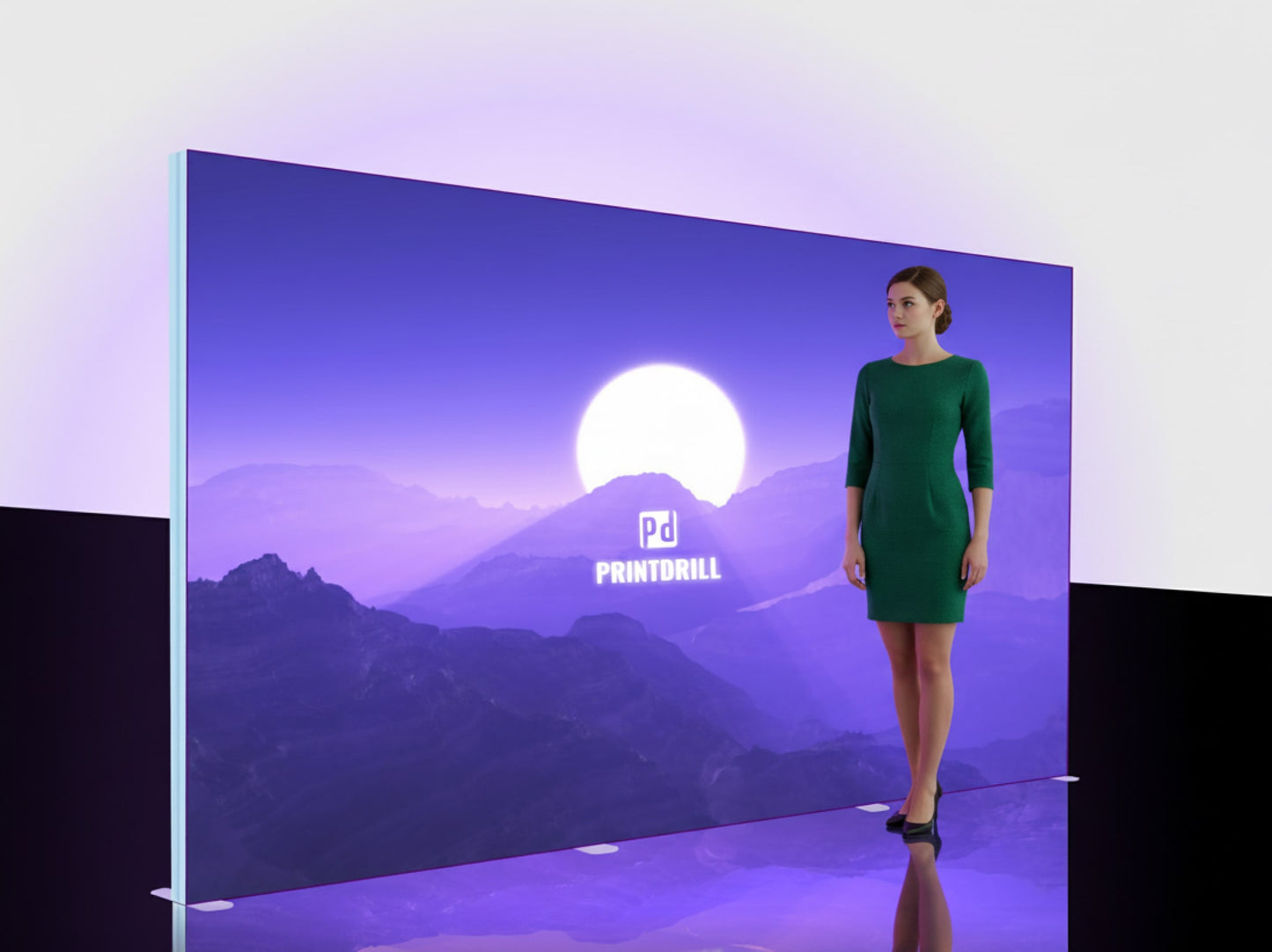
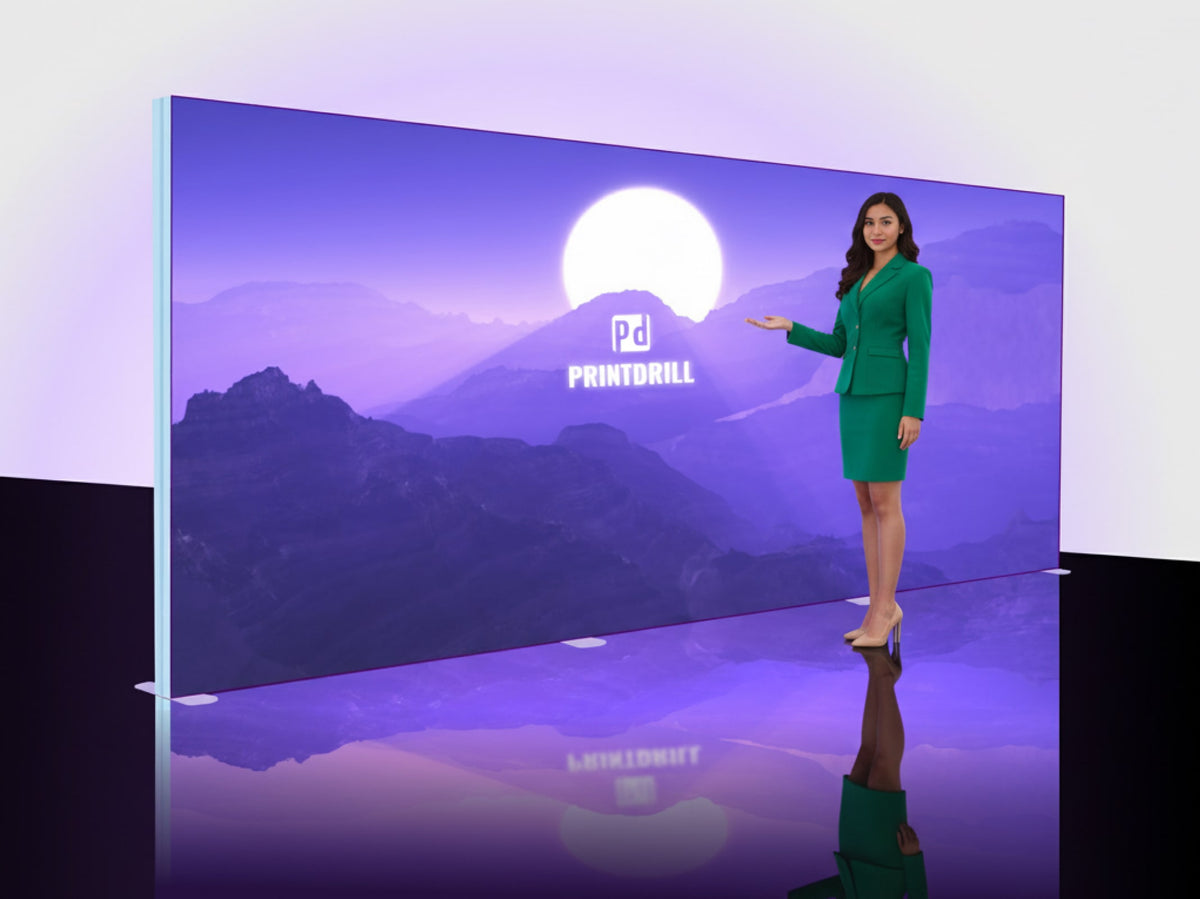
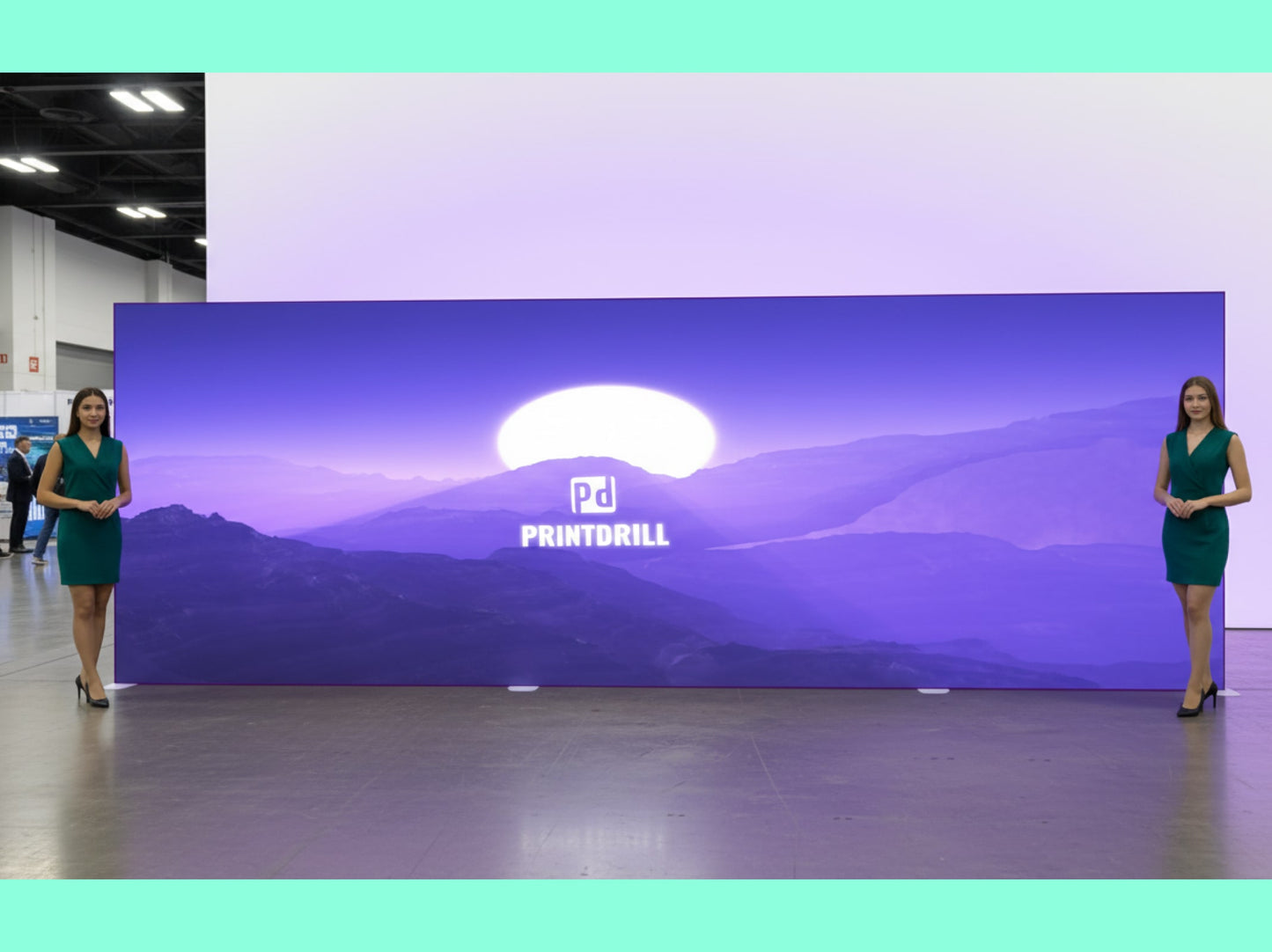
SEG Light Box Display Panel for Architects
- Flexible Width & Height Options
- Double-Sided Backlit Display
- Frameless, Edge-to-Edge Look
- Bright, Even LED Illumination
- Tool-Free Assembly
- Portable & Modular
- Flame-Retardant Backlit Fabric
Couldn't load pickup availability
Need help, a custom request, or a specific budget in mind? Email us, we’ll go above and beyond to make it work for you. hello@printdrill.com

Customer Product Photos ✌︎㋡
(Proof of Work)
SEG Light Box Display Panel for Architects
The SEG Light Box Display Panel is a silicone-edge fabric lightbox designed for architects who need clean, controllable backlit graphics that align with interior design specifications. Ideal for concept spaces, lobbies, and design presentations, this built-in fabric lightbox delivers even illumination for structural backlit walls and architectural signage integration. Simple to update and visually precise, it helps you present materials, wayfinding, and branded elements consistent with project intent and client expectations.
Looking for general-purpose Custom SEG Lightbox Display?
If you’re evaluating options, it’s worth exploring the full version of this Custom SEG Lightbox Display. View our main Custom SEG Light Box Display Panel page here.
360 Degree View - SEG Lightbox Display
Turn Your Booth Into a Visual Magnet with Light Box Display
Adding even a single SEG light box display instantly elevates your booth from standard to standout. The internal LED illumination makes your graphics brighter, sharper, and more noticeable—especially in crowded halls filled with flat, non-lit displays.
Backlit visuals naturally draw the human eye, helping your booth get noticed from farther distances and encouraging more walk-ups. The frameless, edge-to-edge glow creates a premium look that signals professionalism and credibility, making visitors more likely to step in, pause, and engage.
Whether used as a backdrop, side wall, or focal panel, a SEG light box adds depth, contrast, and visual hierarchy—turning passive viewers into active booth visitors.
Why This SEG Light Box Works?
This display works because it solves three common problems at once:
visibility, flexibility, and ease of use.
The internal LED lighting ensures your graphics remain bright and readable even in dim venues. The modular sizing lets you adapt the display to different booths or retail spaces. And the SEG system ensures a perfectly tensioned, professional finish every time, without creases, glare, or bulky frames.
For brands exhibiting frequently or managing multiple locations, this light box offers a long-term, reusable solution with easy graphic swaps.
Collapsible content
Product Specifications
Graphics & Frame
- Graphic Material: Flame-retardant 200g backlit fabric
- Printing: Dye-sublimation
- Graphic Type: Single-sided (2 pieces included – one per side)
- Frame Material: PVC
- Display Type: Double-sided SEG light box
LED & Power Specifications (By Width)
2.8 ft Width
- LED Strips: 2
- LED Beads: 24
- Total Wattage: 72W
- Power Adapter: 152.4W × 1
3.3 ft Width
- LED Strips: 2
- LED Beads: 30
- Total Wattage: 90W
- Power Adapter: 152.4W × 1
6.6 ft Width
- LED Strips: 4
- LED Beads: 60
- Total Wattage: 180W
- Power Adapter: 264W × 1
10 ft Width
- LED Strips: 6
- LED Beads: 90
- Total Wattage: 270W
- Power Adapters: 152.4W × 2
13 ft Width
- LED Strips: 8
- LED Beads: 120
- Total Wattage: 360W
- Power Adapters: 264W × 2
16.4 ft Width
- LED Strips: 10
- LED Beads: 150
- Total Wattage: 450W
- Power Adapters: 264W × 2
20 ft Width
- LED Strips: 12
- LED Beads: 180
- Total Wattage: 540W
- Power Adapters: 264W × 2
How to Order?
Explore the most convenient way to order Signage and Print products online.
Step 1: Customize Your Product
Choose from material types, sizes, finishing options, and extras like lamination. Unsure? Our pre-selected options work for most needs, but feel free to adjust based on your preferences.
Step 2: Graphic Design Options
Upload your own design, use our templates, or let our designers create something for you based on your instructions.
Step 3: Upload Files Later (Optional)
If your design isn't ready, no worries! You can place your order now and upload the design later.
Step 4: Proofing & Approval
We provide free proofing to ensure everything looks perfect. You'll approve the final proof before production starts.
Question & Answers
FAQs for SEG Light Box Display Panel for Architects
Q: What is a SEG Light Box Display Panel and how does it differ from other lightboxes?
A: A SEG Light Box Display Panel uses a tensioned silicone-edge fabric graphic fitted into a lightbox frame to create a flat, illuminated surface. Compared to rigid graphic panels, the tensioned fabric creates a seamless, low-profile edge and allows for easier graphic replacement.
Q: Are these panels suitable for architectural interior installations?
A: Yes. The panels are designed for interior use where consistent backlighting and alignment with interior design specifications are required. Coordinate mounting and finish details with the project team for best results.
Q: Can I update the graphics after installation?
A: Yes. The silicone-edge fabric graphics are replaceable, allowing for updates to branding, messaging, or imagery without removing the frame itself.
Q: What typical environments are appropriate for this product?
A: Typical environments include lobbies, corridors, offices, retail interiors, and hospitality spaces. The product is intended for standard indoor conditions; for non-standard environments, consult project-specific guidance.
Q: How do these panels support interior design specifications?
A: By delivering an even illuminated surface and a clean visual edge, the panels help maintain the intended appearance of colors and graphics under controlled interior lighting, supporting compliance with interior design specifications.
Q: Can these panels be integrated with other architectural signage?
A: Yes. The design of the panel accommodates architectural signage integration by providing a flat, backlit graphic surface that can be coordinated with adjacent sign systems and finishes.
Q: What should architects provide when specifying panels?
A: Provide graphic artwork in the required format, dimensions and tolerances for mounting, desired viewing distance to guide resolution choices, and any mounting or reveal requirements so the panel integrates properly with surrounding finishes.
Q: How durable are the fabric graphics?
A: Fabric graphics are durable for indoor installations and are designed for replacement when needed. Routine cleaning and appropriate handling during installation will help preserve appearance.
Q: Is professional installation required?
A: Installation by qualified personnel is recommended to ensure proper mounting, alignment with adjacent finishes, and safe integration with lighting and electrical systems.
Q: Can the panels match custom sizes for architectural projects?
A: Panels can be specified to align with project dimensions. Discuss project requirements with the provider to determine available size and configuration options.
Q: What maintenance is needed for the panels?
A: Routine maintenance typically involves dusting and gentle surface cleaning of the fabric and frame. Replace graphics as needed when branding or wear necessitates refreshment.
Q: How do I ensure color accuracy in backlit graphics?
A: Coordinate printing specifications with expected viewing conditions and provide color references where critical. Discuss requirements with the production team to establish appropriate printing workflows.
Q: Are these panels suitable for temporary installations like exhibitions?
A: Yes. The replaceable nature of fabric graphics and relatively straightforward mounting options make them practical for temporary or semi-permanent exhibits and showrooms.
Q: What should I consider about ambient lighting when specifying a panel?
A: Consider the surrounding light levels, color temperature, and potential glare. The panel produces its own illumination and should be coordinated with overall lighting design to maintain intended visual balance.
Collapsible content
More info on SEG Light Box Display Panel for Architects
Overview
The SEG Light Box Display Panel combines a tensioned silicone‑edge graphic system with an internally illuminated display to create a flat, uniform visual plane. Designed for interior applications where appearance and consistency matter, this product supports architects in delivering backlit features that meet interior design specifications and integrate with broader architectural signage strategies.
Key Benefits for Architects
- Consistent, controllable illumination: Even backlighting reduces hotspots and preserves the intended appearance of materials and color palettes, so designs read reliably under project lighting schemes.
- Clean, frameless visual impact: The tensioned fabric edge creates a smooth, continuous surface appropriate for structural backlit walls and refined interior installations.
- Coordination with interior design specifications: The panel supports predictable outcomes for color, texture, and scale, helping you meet client and specification requirements.
- Flexible graphic updates: Replaceable fabric graphics let you revise branding, wayfinding, or imagery without major construction changes, reducing downtime during project lifecycle updates.
- Integration-ready: Suited to architectural signage integration plans and modular backlit features, the panel can be coordinated with finishes and mounting approaches to align with overall design intent.
- Streamlined visual presentations: Use the panel for client mock-ups, material studies, or on-site visualizations to communicate design intent with clarity.
Why This Product Works Well for Architects
Architects require reliable, repeatable components that translate drawings and specifications into finished spaces. The SEG Light Box Display Panel offers a predictable visual outcome through a tensioned fabric graphic and integrated illumination, making it easier to control color rendition and uniformity in interior lighting schemes. It is particularly useful where backlit elements are part of the architectural language—corridor features, reception walls, and branded signage—because it presents a refined, flat graphic surface that reads as a built element rather than as a temporary display.
Typical Use Cases in Architectural Projects
Architects commonly specify SEG Light Box Display Panels for:
- Reception and lobby walls where structural backlit walls create focal points.
- Branded corridor and amenity signage that requires architectural signage integration with finishes.
- Interior feature walls in corporate, hospitality, and institutional projects aligning with interior design specifications.
- Design presentation mock-ups and on-site visualization of graphics and backlit effects for client review.
- Temporary or semi-permanent exhibit and showroom elements where graphics may be updated periodically.
Customization and Graphic Options
The SEG system accepts tensioned fabric graphics designed to fit precisely within the frame, allowing full-bleed imagery, white space, or typographic compositions to be presented with a low-profile edge. Architects can specify artwork to coordinate with materials, finishes, and color standards used elsewhere in the project. Common customization considerations include graphic artwork, print resolution appropriate for viewing distances, edge finishing for a seamless fit, and coordinating panel dimensions to align with modular wall systems or façade elements.
Installation and Integration Considerations
The panels are intended for interior installations where consistent backlighting and visible finishes are required. For successful architectural signage integration, coordinate mounting details, reveal tolerances, and adjacent finishes early in the design phase. The system works best when included in construction documents with clear installation instructions and acceptance criteria for illuminated appearance to ensure that final conditions meet interior design specifications.
Environmental and Usage Conditions
SEG Light Box Display Panels are designed for typical indoor environments such as lobbies, offices, retail interiors, and hospitality spaces. Considerations for placement include ambient lighting levels, proximity to HVAC diffusers, and potential exposure to moisture—panels are intended for standard interior conditions and should be specified accordingly. For environments with atypical humidity, temperature extremes, or outdoor exposure, consult project-specific guidance to determine suitability and required protections.
Maintenance and Longevity
Tensioned fabric graphics are replaceable and can be cleaned gently according to care instructions. Routine maintenance typically involves dusting and occasional surface cleaning of the fabric and frame components. The ability to update graphics simplifies long-term maintenance and branding changes without replacing structural elements.
Coordination Tips for Architects
- Include clear graphic sizing and mounting details in drawing packages to avoid site coordination issues.
- Specify viewing distance and expected lighting conditions so artwork and printing resolution match intended perception.
- Coordinate panel reveals and adjacent materials to ensure a cohesive architectural expression.
- Plan for access to replace graphics if branding or messaging is expected to change over time.
Compatibility with Signage and Lighting Strategies
The SEG Light Box Display Panel supports a variety of interior signage strategies by offering a backlit graphic surface that integrates visually with architectural signage integration plans. Because the panel creates an even luminous plane, it complements broader architectural lighting panels and can be used alongside other illuminated features to form coherent lighting narratives within a space.
Buying Confidence and Practical Value
When specifying backlit features, choose components that simplify coordination and produce predictable outcomes. The SEG Light Box Display Panel offers a practical solution for architects seeking a refined illuminated surface that aligns with interior design specifications and supports architectural signage integration. Its replaceable fabric graphics and even illumination make it a flexible element for long-term projects where appearance, updateability, and integration matter.
For project-specific guidance, share your drawing details, mounting preferences, and graphic requirements with our team so we can help align the panel with your design intent and installation constraints.
Looking for our standard options? View our main SEG Light Box Display Panel page here.