

What Is an Aluminum Composite Sign? Business Guide
TL;DR:
- Aluminum composite signs are lightweight, durable panels made of bonded aluminum skins and a core for flatness and weather resistance. They are ideal for outdoor branding, trade shows, and storefronts due to their strength, versatility, and longevity, which can range from 10 to 40 years. Proper coating selection and thickness are essential for optimal performance and cost-efficiency in various environmental conditions.
An aluminum composite sign is a rigid, lightweight panel made from two pre-painted aluminum skins bonded to a thermoplastic or mineral-filled core, producing a flat, durable surface built for commercial signage. The industry standard term for this material is aluminum composite material, or ACM. Businesses and marketers rely on ACM panels because they deliver the structural strength of metal at roughly half the weight, making them practical for storefronts, trade show displays, and outdoor branding. This guide covers the material properties, construction details, and real-world applications that make ACM the preferred choice for custom aluminum signs for businesses.

What is an aluminum composite sign, exactly?
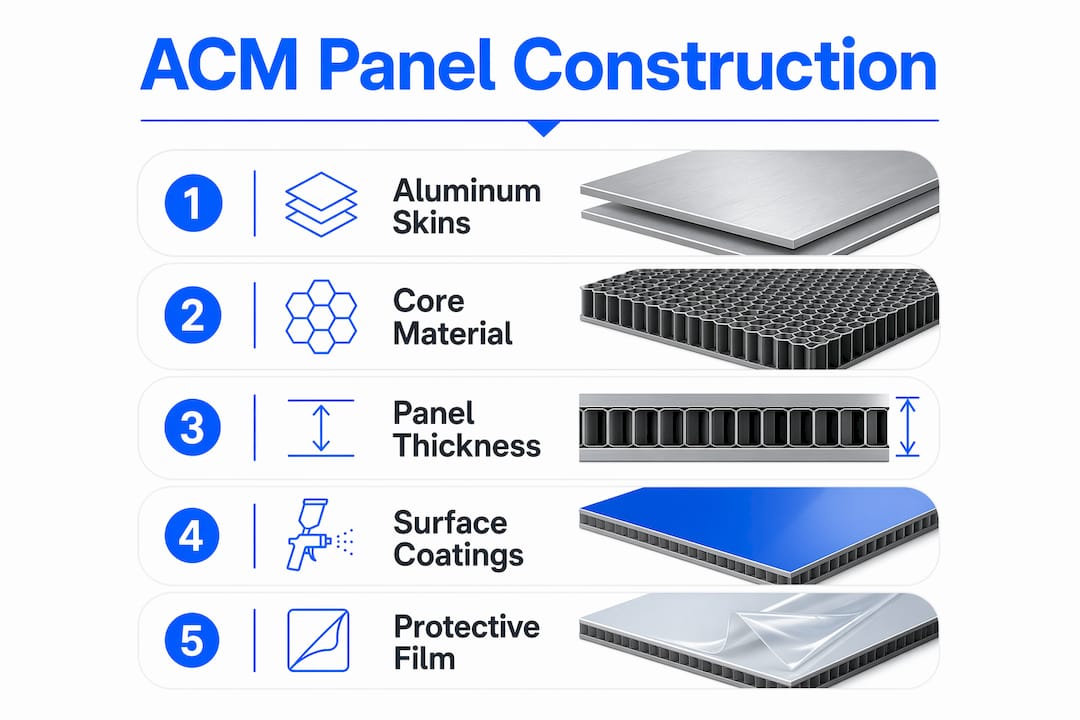
An aluminum composite sign is defined as a three-layer sandwich structure with two pre-painted aluminum skins bonded to a thermoplastic or mineral-filled fire-retardant core. The result is a panel that weighs approximately 1.1 to 1.5 lbs per square foot. That weight is roughly half that of solid aluminum plate at the same thickness, which matters significantly when you are shipping, mounting, or transporting signs across multiple locations.
The aluminum skins provide a hard, paintable surface that resists dents, scratches, and corrosion. The core absorbs mechanical stress and thermal movement. Together, these layers produce a panel that stays flat under conditions that would cause solid metal to buckle or warp. For businesses printing high-resolution brand graphics, that flatness is not a cosmetic detail. It is a functional requirement.
ACM panels also accept a range of surface coatings applied during manufacturing. These coatings determine color, gloss level, and long-term weather resistance. The coating choice is one of the most consequential decisions when specifying ACM for outdoor use.
How are aluminum composite panels constructed?
The two aluminum skins in a standard ACM panel are typically 0.2 mm to 0.5 mm thick each. The core between them is either polyethylene (PE) for general use or a mineral-filled compound for fire-retardant applications. Fire-retardant cores are required in many building and trade show environments, so specifying the right core type matters before ordering.
Standard panel thickness for signage ranges from 3 mm to 5 mm. Interior applications can use 2 mm–4 mm panels. Exterior cladding and large outdoor signs typically require 4 mm–6 mm panels or thicker. Choosing the wrong thickness for the application results in flex, mounting problems, or premature failure.
Coating types and their impact
The two most common coating systems are polyester and PVDF (polyvinylidene fluoride). Polyester coatings are cost-effective and perform well in low-exposure indoor environments. PVDF coatings, sold under brand names like Kynar 500, contain 70% Kynar resin and provide superior UV and fade resistance over a decade of outdoor exposure. That difference in performance is significant for any sign expected to represent a brand for years without repainting or replacement.
| Specification | Interior Use | Exterior Signage | Exterior Cladding |
|---|---|---|---|
| Panel Thickness | 2 mm–4 mm | 3 mm–5 mm | 4 mm–6 mm+ |
| Core Type | PE | PE or FR | FR (fire-retardant) |
| Coating | Polyester | Polyester or PVDF | PVDF (Kynar 500) |
| Expected Lifespan | 10–15 years | 15–20 years | 20–40 years |
Pro Tip: For any sign mounted outdoors in direct sun, specify a PVDF coating with 70% Kynar 500 resin. The upfront cost difference over polyester is small compared to the cost of replacing faded signage in three to five years.
ACM signs vs. solid aluminum and other materials
ACM solves a specific problem that solid aluminum creates. Solid metal expands and contracts with temperature changes, producing a rippled surface effect called oil-canning. ACM absorbs thermal expansion in its core, maintaining a perfectly flat surface. Large-format print shops favor ACM for this reason. A flat panel produces sharp, consistent print results. A rippled panel does not.
Weight is the other major factor. At 1.1 to 1.5 lbs per square foot, ACM reduces structural load on mounting surfaces and cuts shipping costs for multi-site rollouts. A franchise deploying signage across 50 locations saves measurably on freight and installation labor compared to using solid aluminum panels of the same size.
| Feature | ACM Panel | Solid Aluminum | PVC Foam Board |
|---|---|---|---|
| Weight | 1.1–1.5 lbs/sq ft | ~2.5–3 lbs/sq ft | ~0.6–0.8 lbs/sq ft |
| Flatness | Excellent | Prone to oil-canning | Good |
| Weather Resistance | Excellent | Good | Moderate |
| Print Surface Quality | Excellent | Moderate | Good |
| Lifespan Outdoors | 10–40 years | 10–20 years | 3–7 years |
| Fabrication Ease | High | Moderate | High |
PVC foam board is lighter but degrades faster outdoors. Solid aluminum is durable but heavier and prone to surface distortion. ACM sits in the practical middle ground for most commercial signage applications.
Aluminum composite panel uses in business branding
ACM panels cover a wide range of commercial applications. The most common uses include outdoor storefront signs, directional wayfinding signs, trade show display panels, real estate signs, construction site hoardings, and vehicle graphics backing boards. Each application benefits from the same core properties: flatness, light weight, and weather resistance.
For brand visibility, ACM provides an excellent surface for direct UV digital printing. Colors print vividly and accurately, which matters when brand standards require precise color matching across multiple sign locations. A retail chain with 20 locations needs consistent color across every storefront sign. ACM delivers that consistency in a way that painted wood or PVC board cannot reliably match.
The benefits of aluminum composite signs for trade show use are particularly strong. Panels are light enough to transport without freight concerns, rigid enough to mount without frames in many configurations, and flat enough to display large-format graphics without distortion. Exhibitors using metal A-frame signs alongside ACM panels create cohesive branded environments at a fraction of the weight of traditional display materials.
- Outdoor storefronts: ACM withstands rain, UV exposure, and temperature swings without warping or fading when properly coated.
- Trade show displays: Light weight reduces shipping costs and speeds up booth setup and teardown.
- Directional signage: Rigid panels mount cleanly on posts or walls without requiring heavy structural support.
- Real estate and construction: ACM holds up on job sites and outdoor property displays for months without degradation.
- Event branding: Panels can be cut to custom shapes using standard routing tools, enabling non-rectangular sign formats.
The typical lifespan of ACM signage ranges from 10 to 40 years depending on material quality, environmental exposure, and maintenance. High-quality panels with premium coatings in protected environments trend toward the longer end of that range. That longevity makes ACM one of the lowest cost-per-year signage materials available.
Pro Tip: If your ACM signs will face direct sun in southern states like Texas, Florida, or Arizona, choose a PVDF-coated panel and request a UV-resistant overlaminate on printed graphics. This combination protects both the panel and the print layer.
How to install and maintain aluminum composite signs
Installation is straightforward because ACM panels are easily cut, routed, and bent using standard woodworking and metalworking tools. That fabrication flexibility reduces production costs and allows sign shops to produce custom shapes without specialized equipment. Here is the standard installation process for most business applications:
- Measure and mark mounting locations. Use a level and measuring tape to mark exact drill points before touching the panel. Errors at this stage are costly to correct.
- Pre-drill holes in the panel. Use a sharp drill bit sized for your chosen fastener. ACM drills cleanly without cracking when the correct bit speed is used.
- Select the right mounting hardware. Standoffs, screws, and aluminum extrusion frames are the three most common options. Standoffs create a floating appearance. Extrusion frames work for large panels requiring edge support.
- Apply a protective film during handling. Most ACM panels ship with a protective film liner on the face. Leave this film in place until installation is complete to prevent surface scratches.
- Secure the panel and remove the protective film. Once mounted, peel the film carefully from one corner to avoid static buildup that attracts dust.
- Inspect edges and seal if needed. In high-moisture environments, sealing cut edges with a compatible sealant prevents moisture from entering the core.
Maintenance is minimal. Wipe panels with a mild soap solution and a soft cloth. Avoid abrasive cleaners that scratch the coating. Inspect mounting hardware annually for corrosion, particularly in coastal environments. The quality of the protective film on panels during fabrication affects surface integrity, so request panels with a high-tack film if your fabricator is cutting and routing before installation.
Warranty terms are a reliable quality indicator. Reputable ACM manufacturers offer 10-year or longer warranties on coatings and panel integrity. Short or absent warranties signal lower-grade materials that may fail prematurely outdoors.
Key takeaways
ACM is the most practical rigid signage material for businesses that need durability, flatness, and light weight in a single panel.
| Point | Details |
|---|---|
| Core structure determines performance | Two aluminum skins bonded to a PE or FR core produce flatness and thermal stability solid metal cannot match. |
| Coating choice drives outdoor lifespan | PVDF coatings with 70% Kynar 500 outperform polyester coatings significantly in UV and fade resistance. |
| Weight advantage reduces total cost | At 1.1–1.5 lbs per square foot, ACM cuts shipping, structural, and installation costs across multi-site deployments. |
| Thickness must match the application | Interior signs use 2 mm–4 mm panels; outdoor and cladding applications require 4 mm–6 mm or thicker. |
| Lifespan justifies the investment | Properly specified ACM signs last 10–40 years, making them among the lowest cost-per-year signage options available. |
What i’ve learned choosing ACM signs for real marketing projects
After working with businesses across retail, trade shows, and outdoor advertising, the single most consistent mistake I see is treating all ACM panels as equivalent. They are not. A 3 mm panel with a polyester coating and a 4 mm panel with a PVDF coating are fundamentally different products with different performance profiles. The price difference between them is often under 15%, but the performance gap outdoors over five years is substantial.
The second pattern I see is underestimating the value of the protective film. Buyers focused on panel cost often overlook film quality entirely. A poor-quality film tears during routing, leaves adhesive residue on the face, and slows fabrication. That hidden cost shows up in labor time, not the material invoice.
For businesses considering outdoor aluminum sign applications, the practical advice is simple. Specify the coating first, then the thickness, then the core type. Most vendors lead with price. You should lead with application requirements. A sign that fades in two years was never actually affordable, regardless of what it cost at purchase.
One more thing worth noting: ACM is not always the right answer. For short-term event signage under six months, PVC foam board is lighter, cheaper, and perfectly adequate. ACM earns its place when longevity, print quality, and brand consistency matter over years, not weeks.
— Printdrill
Complete your signage setup with Printdrill
ACM signs anchor a branded environment, but they work best alongside flexible display solutions that adapt to different venues and events. Printdrill offers custom banners, trade show booth kits, and outdoor display products that complement rigid ACM panels in any marketing setup.
For outdoor events and trade shows, pairing ACM directional signs with a custom mesh banner gives you wind-resistant, large-format coverage that rigid panels alone cannot provide. For full booth environments, Printdrill’s 10x20 trade show booth kit delivers a complete branded display with fast setup and nationwide shipping. Free design assistance is available on every order, so you get print-ready files that match your brand standards across every product in your display package.
FAQ
Q: What does ACM stand for in signage?
A: ACM stands for aluminum composite material. It refers to the three-layer panel construction used in most commercial aluminum composite signs.
Q: How long do aluminum composite signs last outdoors?
A: ACM signs last 10 to 40 years outdoors depending on coating quality, environmental exposure, and maintenance. Panels with PVDF coatings in moderate climates trend toward the longer end of that range.
Q: Is aluminum composite the same as solid aluminum?
A: No. Aluminum composite panels use two thin aluminum skins bonded to a core, making them roughly 50% lighter than solid aluminum plate. They also resist the oil-canning surface distortion that affects solid metal under temperature changes.
Q: What thickness should i choose for an outdoor sign?
A: Outdoor signage applications typically require 3 mm–5 mm panels. High-wind or large-format outdoor signs benefit from 4 mm–6 mm panels for added rigidity.
Q: Can aluminum composite signs be printed directly?
A: Yes. ACM panels accept direct UV digital printing and produce vivid, accurate colors. The flat, hard surface supports high-resolution graphics, making ACM a preferred substrate for brand-critical outdoor and trade show signage.
