

What Is a Trade Show Booth? Design, Types, and Setup Tips
TL;DR:
- A trade show booth is a branded space used to showcase products, generate leads, and build brand recognition face to face. Effective booths focus on visibility, demonstration, and lead capture, with strategic design elements like signage, displays, and technology to attract visitors. Success depends on visitor-focused layout, use of vertical space, staff training, and integrating digital tools to maximize engagement and sales.
A trade show booth is a branded physical space rented at an industry exhibition where businesses showcase products, generate leads, and build brand recognition face to face. Also called an exhibition booth or exhibit display, this dedicated area is your company’s storefront on the show floor. Done right, it pulls attendees in, communicates your value in seconds, and feeds your sales pipeline long after the event ends. This guide covers booth design, types, setup strategy, and the benefits that make exhibition booths one of the highest-ROI marketing investments available.
What is a trade show booth and what does it include?
A trade show booth is defined by three core functions: brand visibility, product demonstration, and lead capture. Every structural and design decision should serve at least one of those functions. The physical footprint is just the starting point. What fills that space, and how it is arranged, determines whether attendees stop or walk past.
Most exhibition booths share a common set of components:
- Backdrop display. Tension fabric backdrops, SEG lightbox displays, or pop-up fabric displays form the visual anchor of the booth. They carry your logo, tagline, and brand colors.
- Signage. Effective signage does more than list prices. It communicates product stories and brand identity in under three seconds.
- Product display surfaces. Tables, pedestals, and shelving units position products at eye level for maximum interaction.
- Lead capture tools. Badge scanners, QR codes, and tablet forms collect contact data and behavioral signals from visitors.
- Technology integration. Mobile POS systems, interactive screens, and digital payment terminals handle transactions and engagement on the spot.
The layout matters as much as the individual components. Pulling the front table back 2–3 feet from the aisle creates a doorway effect that invites visitors in rather than blocking them at the edge. That single adjustment measurably improves foot traffic and attendee comfort.
Pro Tip: Place your highest-value product or demo at eye level, centered in the booth. Attendees make a stop-or-keep-walking decision in under three seconds, so your most compelling item needs to be the first thing they see.

Vertical space is one of the most underused assets in booth design. Displays that use vertical space can increase engagement by up to 40% compared to flat, table-level arrangements. Tall backdrops, hanging banners, and tiered shelving all draw the eye upward and make a booth visible from across the floor. For more on how graphics drive attendance, see why booth graphics attract attendees at trade shows.
How do different trade show booth types compare?
Exhibition booths come in several standard configurations. The right choice depends on your budget, event goals, and how much setup time you have available.
| Booth type | Typical size | Setup complexity | Best for |
|---|---|---|---|
| Standard inline booth | 10x10 ft | Low | First-time exhibitors, tight budgets |
| Mid-size inline booth | 10x20 ft | Medium | Product launches, growing brands |
| Custom modular booth | 10x15 ft and up | Medium to high | Brands needing flexible configurations |
| Island booth | 20x20 ft and larger | High | Flagship presence, large product lines |
| Portable pop-up display | Varies | Very low | Road shows, frequent travel |
The 10x10 booth is the most common starting point. A 10x10 booth gives exhibitors roughly three seconds to attract attention and communicate their core message. That constraint forces clarity. Brands that try to say everything in a 10x10 space say nothing. One clear headline, one strong visual, and one call to action is the formula that works.
The 10x20 configuration doubles your floor space and allows for a dedicated demo area alongside a product display zone. A 10x20 curved tension fabric booth adds visual depth and draws the eye from multiple angles, which is a real advantage in crowded halls. Mid-size booths also give staff room to move without crowding visitors.
Custom modular booths, such as a 10x15 tension fabric exhibit kit, offer the best balance of portability and presence. The frames break down into carry bags, the graphics are replaceable between events, and the overall footprint is large enough to include a counter, backdrop, and side panels. For brands that exhibit three or more times per year, modular systems pay for themselves quickly.
A compact 10x10 space can also double as a content production environment. With a simple AV setup and good lighting, you can record product demos, customer testimonials, or short-form video content directly at the booth. That footage extends the event’s marketing value well beyond the show floor.
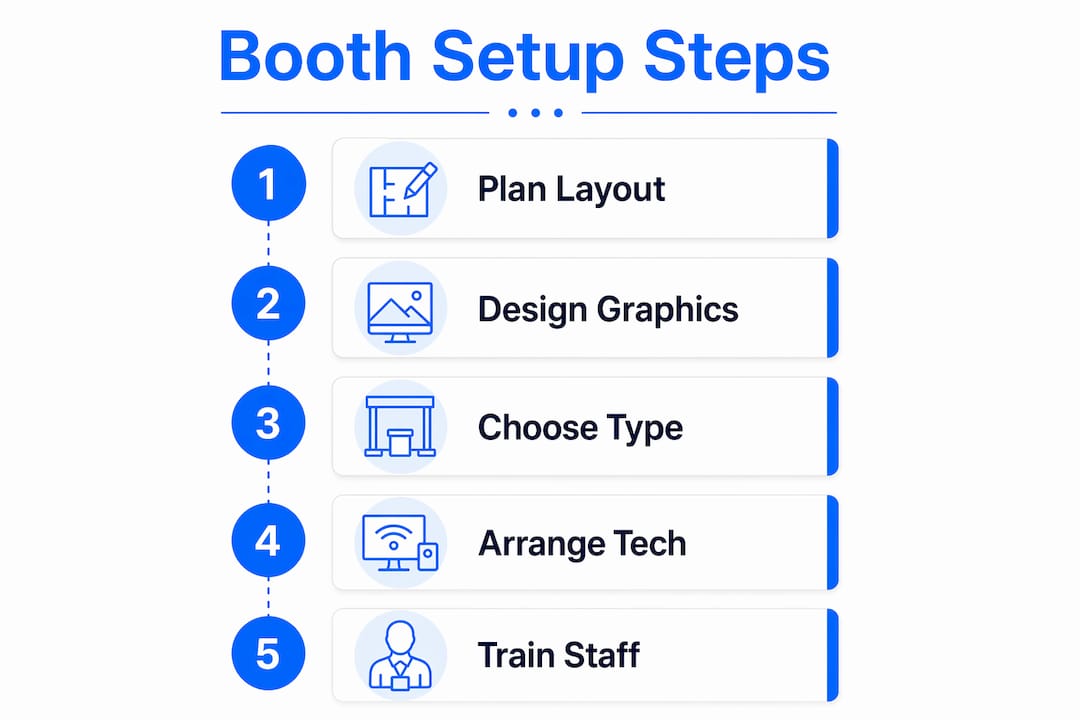
What practical strategies maximize trade show booth setup?
Effective booth setup starts weeks before the event, not on the morning of load-in. A clear pre-event plan separates exhibitors who generate pipeline from those who collect business cards they never follow up on.
- Storyboard your booth message. Write one sentence that describes what your company does and who it serves. Every graphic, product placement, and staff talking point should connect back to that sentence.
- Map visitor flow. Decide where visitors enter, where they pause for a demo, and where they exit. A well-planned path prevents bottlenecks and keeps conversations moving.
- Confirm compliance requirements. Many events require vendors to provide general liability insurance before setup. Confirm requirements with the event organizer at least two weeks out.
- Set up lead capture before day one. Badge scanners, QR code forms, and CRM-connected tablets should be tested and ready before the first attendee walks in.
- Brief your staff. Every team member at the booth needs to know the core message, the top three questions visitors ask, and how to qualify a lead in under two minutes.
- Plan your post-event follow-up. Decide in advance how leads will be segmented and what the first follow-up message will say. Waiting until after the event to plan this step costs you pipeline.
Pro Tip: Integrate lead capture with your CRM before the event. Behavioral signals, such as which demo a visitor watched or which product they picked up, provide richer lead context than a name and email address alone.
Interactive technologies such as AI photo booths and gamification strongly increase booth dwell time and lead capture. These activations turn passive foot traffic into active engagement. A visitor who spends four minutes at your booth is far more likely to convert than one who glances at your banner and moves on. For a complete pre-event checklist, the 2026 trade show booth planning guide covers every step from graphics ordering to post-show follow-up.
What are the benefits of trade show booths for brand promotion?
A well-designed exhibition booth delivers benefits that digital advertising cannot replicate. Face-to-face interaction builds trust faster than any email sequence or social ad campaign.
- Brand differentiation. A strong booth design makes your brand visually distinct in a hall full of competitors. Backlit SEG displays, bold fabric graphics, and consistent color use signal professionalism before a single word is spoken.
- Lead quality. Visitors who stop at your booth have already self-selected as interested. That intent signal makes trade show leads warmer than most inbound digital leads.
- Behavioral data. A booth’s most valuable asset is the data it generates. Behavioral signals, such as which products visitors touched or which demos they watched, exceed simple contact info in lead quality.
- Sales acceleration. Live demos close objections faster than any content asset. A prospect who sees your product work in person moves through the sales cycle more quickly.
“A trade show booth is more effective when designed as an immersive brand experience rather than just a display area.” — Snapbar, Trade Show Booth Design: Strategy, Layout, Activations & Pipeline ROI
Failing to offer digital payment options at your booth can lead to losing over 30% of potential sales. Retail-focused exhibitors who add mobile POS systems and QR code checkout remove the friction that kills impulse purchases on the show floor. That single addition can shift a booth from a lead-gen tool to a direct revenue channel.
Key Takeaways
A trade show booth is a branded exhibition space that combines physical design, technology, and staff strategy to generate leads and build brand recognition at industry events.
| Point | Details |
|---|---|
| Core booth functions | Every design decision should serve brand visibility, product demonstration, or lead capture. |
| Vertical space matters | Displays using vertical space increase engagement by up to 40% over flat arrangements. |
| Booth size drives strategy | A 10x10 gives three seconds to communicate; larger formats allow dedicated demo zones. |
| Technology is non-negotiable | Mobile POS, QR codes, and CRM-connected lead capture are standard for competitive exhibitors. |
| Behavioral data beats contact info | Tracking which demos and products visitors engage with provides richer pipeline context. |
What I’ve learned from watching booths succeed and fail
After working with exhibitors across dozens of industries, the pattern is clear. The booths that generate real pipeline share one trait: they are designed for the visitor, not the brand. The brands that fail spend their entire budget on a beautiful backdrop and then fill the floor space with a table covered in brochures nobody takes.
The visitor-first approach means creating an intuitive, inviting space that encourages exploration. That sounds obvious. In practice, it means removing barriers, literally and figuratively. No table blocking the entrance. No staff sitting on their phones. No signage that requires three seconds of reading to understand.
Technology is where I see the biggest missed opportunity. Exhibitors invest in interactive screens and then never connect them to a CRM. The activation looks impressive, but the behavioral data it generates goes nowhere. Connecting every touchpoint, from badge scans to demo participation, to your CRM is what separates a booth that looks good from one that actually builds pipeline.
Staff training is the most underrated variable. A well-designed booth with undertrained staff will underperform a plain booth with a sharp, well-briefed team every time. Brief your people on the message, the qualifying questions, and the handoff process before they step on the floor.
— Printdrill
Printdrill’s trade show display products for your next event
Planning an upcoming exhibition? Printdrill offers a full range of printed booth components built for exhibitors who need professional results without a custom fabrication budget.
From 10x20 tension fabric booth kits with display racks to custom 10x10 canopy tents for outdoor events, every product ships nationwide with fast turnaround options. Printdrill also offers custom fabric banners that are lightweight, wrinkle-resistant, and print-ready for booth backdrops and signage. Free design assistance is available for customers who need help preparing artwork before production. Browse the full trade show display catalog at printdrill.com and order ahead of your next event date.
FAQ
Q: What is a trade show booth used for?
A: A trade show booth is used to showcase products or services, generate leads, and build brand recognition at industry exhibitions and conferences. It serves as a company’s physical marketing presence on the event floor.
Q: What should you include in a trade show booth?
A: A booth should include a backdrop display, clear signage, product display surfaces, lead capture tools, and technology such as a mobile POS or QR code system. Each element should serve visibility, demonstration, or lead capture.
Q: What is the standard trade show booth size?
A: The most common trade show booth size is 10x10 feet. Larger formats such as 10x20 and custom modular configurations are used by brands that need dedicated demo zones or greater floor presence.
Q: How do you set up a trade show booth effectively?
A: Effective setup starts with a clear one-sentence brand message, a mapped visitor flow, and pre-tested lead capture tools. Staff should be briefed on qualifying questions and follow-up plans before the event opens.
Q: What types of displays work best for trade show booths?
A: Tension fabric backdrops, SEG lightbox displays, and pop-up fabric displays are the most widely used formats. Backlit displays and vertical structures increase visibility across the show floor and improve attendee engagement.
