

What Is a Fabric Tension Frame for Events?
TL;DR:
- A fabric tension frame is a portable display system that stretches dye-sublimated polyester fabric over a lightweight aluminum frame to create a wrinkle-free marketing surface. It is used at trade shows and events due to its quick setup, reusability, and polished appearance. Proper fabric sizing, handling, and assembly are essential for achieving a professional, long-lasting display.
A fabric tension frame is a modular display system that stretches printed polyester fabric over a lightweight aluminum frame to create a smooth, wrinkle-free marketing surface. The industry standard term for this format is a tension fabric display. Event planners and marketers use these systems at trade shows, conferences, and brand activations because they pack down small, set up fast, and look polished on the floor. The two core components are a 6063-T5 aluminum alloy frame and a dye-sublimated warp-knit polyester graphic. Together, they produce a non-glare, seamless visual surface that photographs well and holds up through repeated use.
What is a fabric tension frame and how does it work?
A fabric tension frame is defined as a display system where the fabric graphic is manufactured slightly smaller than the frame dimensions, then stretched tightly over or into the frame to eliminate wrinkles. That deliberate size difference is the core engineering principle. The tension created by stretching the fabric is what keeps the surface flat and professional-looking, not any adhesive or rigid backing.

The aluminum frame itself is built from 6063-T5 alloy, a grade chosen for its high strength-to-weight ratio. Frames are modular, meaning individual sections connect together to form the full structure. This design lets you reconfigure the same frame into different shapes and sizes depending on your booth layout.

The fabric used in tension displays is warp-knit polyester, a material that stretches mechanically without elastic fibers. Fabric weight typically falls between 200–300 g/m², which provides enough opacity to prevent light bleed and enough body to hold a sharp printed image. The stretch properties of warp-knit polyester are what make the tensioning process work consistently across the full surface.

Graphics are printed using dye-sublimation, a process where heat transfers dye permanently into the fabric fibers rather than sitting on top of the surface. The result is color that does not crack, peel, or fade with normal handling. Dye-sublimation also produces a matte finish, which eliminates glare under trade show lighting.

Silicone edge graphics vs. pillowcase style
Two attachment methods dominate the market. Silicone Edge Graphics, known as SEG, use a silicone strip sewn around the fabric perimeter. That strip inserts into a narrow channel in the aluminum frame, pulling the fabric evenly taut from all four sides. SEG systems produce a frameless look because the hardware is fully concealed inside the channel.
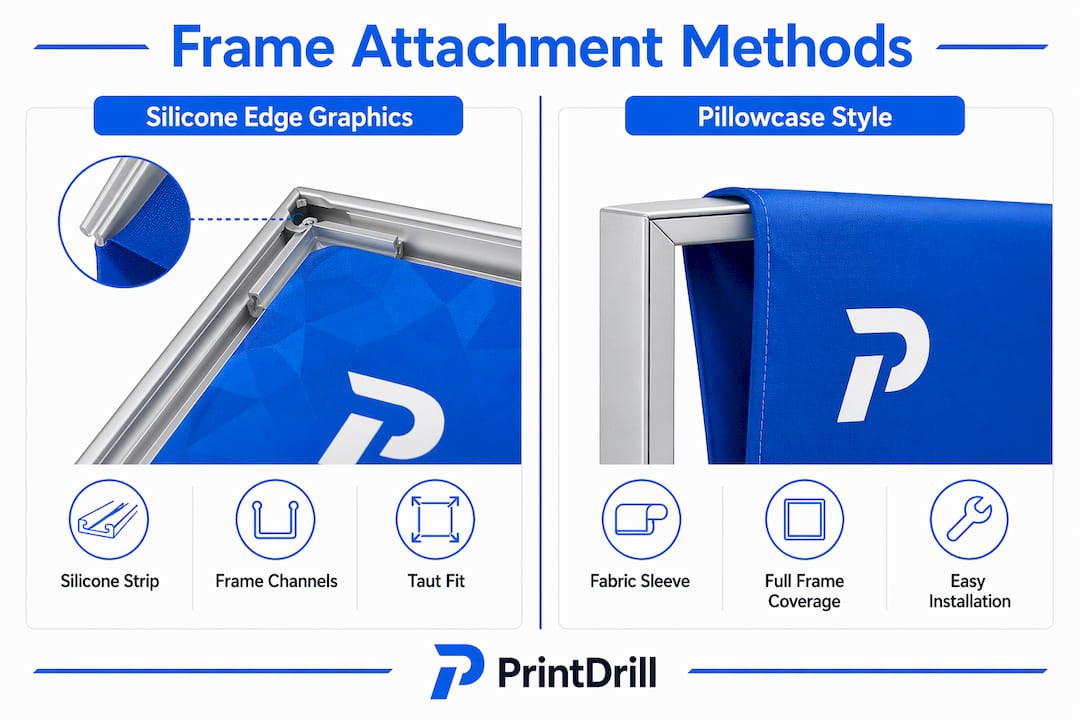
The pillowcase style works differently. The fabric is sewn into a sleeve that slides over the entire frame, similar to a pillowcase over a pillow. This method is simpler to produce and works well for curved or irregular frame shapes. Both methods achieve a wrinkle-free surface, but SEG offers easier graphic replacement since you only need to pull the silicone strip out of the channel.
Pro Tip: When ordering SEG fabric, confirm that the silicone strip gauge matches your frame channel width exactly. A mismatch of even a fraction of an inch causes uneven tension and visible wrinkles at the edges.
What types of fabric tension frames are available?
Fabric tension frames come in free-standing, wall-mounted, curved, and custom-shaped configurations. Each type suits a different event environment and branding goal. Choosing the wrong type for your space is one of the most common and costly mistakes event planners make.
| Frame type | Best use case | Key feature |
|---|---|---|
| Free-standing straight | Trade show backwalls, photo backdrops | Self-supporting, easy to reposition |
| Free-standing curved | High-traffic event entrances, brand activations | Draws the eye, wraps the viewer’s field of vision |
| Wall-mounted | Retail environments, permanent installations | No floor footprint, clean integration |
| Modular / configurable | Large 10x20 ft trade show booths | Connects in sections for custom layouts |
| Custom-shaped | Product launches, media events | Matches brand silhouette or logo shape |
Free-standing straight frames are the most common choice for trade show backwalls. They set up quickly, support large format graphics, and work with both SEG and pillowcase fabrics. A curved tension fabric display adds visual depth and draws attention from wider angles, making it effective at busy expos where you need to pull foot traffic from the aisle.
Modular frames are the most flexible option for planners who exhibit at multiple events with different booth sizes. The same frame sections reconfigure from a 10x10 ft setup to a 10x20 ft layout without purchasing new hardware. This reusability significantly reduces the cost per event over time.
Wall-mounted frames work best in retail stores, showrooms, and permanent brand environments where floor space is limited. They function identically to free-standing frames in terms of fabric attachment, but anchor directly to a wall surface instead of using a base.
What are the practical benefits of fabric tension frames for event marketing?
Tension fabric displays outperform traditional hard panel signage on four practical measures: weight, setup speed, appearance, and cost per use. Each of these factors directly affects your event budget and on-site experience.
-
Lightweight and portable. Snap-fit aluminum frames pack into compact carry bags or cases. A full 10x10 ft backwall system typically fits into one or two bags that check as standard luggage. This eliminates freight costs that rigid displays generate.
-
Fast, tool-free assembly. Most tension fabric frames use snap-lock or push-button connectors that require no tools. A single person can assemble a standard backwall in under 30 minutes. That speed matters when you are setting up at 7 a.m. before a show opens.
-
Wrinkle-free, non-glare surface. The tensioned polyester surface stays flat under normal conditions and does not reflect overhead lighting. This makes the display look clean in photos and walkthroughs, which is critical for media events and product launches.
-
Reusable hardware with replaceable graphics. The aluminum frame lasts through many events. When your branding changes, you replace only the fabric graphic, not the entire display. This reduces long-term costs compared to replacing full hard panel displays.
-
Durable under repeated use. Dye-sublimated graphics resist fading, and the polyester fabric handles folding and transport without permanent creasing when handled correctly.
-
Cost-effective at scale. For planners who exhibit four or more times per year, the per-event cost of a tension fabric system drops significantly compared to single-use printed panels or rented displays.
Pro Tip: Order a backup fabric graphic before your first event. Shipping a replacement graphic is far cheaper than reprinting and expediting a full display on-site.
How to install and maintain fabric tension frames
Correct installation determines whether your display looks professional or amateurish on the floor. The process is straightforward, but the details matter.
Installation steps:
- Lay out all frame sections and identify connectors before starting assembly.
- Connect aluminum sections in sequence, working from the base upward.
- For SEG fabric, start inserting the silicone strip at one corner and work around the perimeter in one continuous motion. Do not pull from opposite sides simultaneously, as this creates uneven tension.
- For pillowcase fabric, slide the sleeve over the assembled frame starting at the top, then smooth downward.
- Check all four corners for equal tension before finalizing the display position.
Storage and handling best practices:
- Roll fabric for storage rather than folding it. Folding creates permanent creases that weaken elasticity over time and show up as lines on the display surface.
- Store frames disassembled in padded bags to protect the anodized finish and connector joints.
- Keep fabric away from sharp objects during transport. A small snag in warp-knit polyester can run across the surface and ruin the graphic.
Common issues and fixes:
- Fabric sagging in the center: The graphic is likely oversized. Proper fabric sizing relative to frame dimensions is critical. An undersized panel appears loose; an oversized panel stresses the corners and weakens the display over time.
- Frame sections not aligning: Check that all connectors are fully seated. A partially connected joint shifts the frame geometry and causes the fabric to pull unevenly.
- Silicone strip pulling out of channel: The strip gauge does not match the channel width. Contact your supplier for a replacement strip in the correct size.
Cleaning fabric graphics is simple. Spot clean with a damp cloth and mild detergent. Most warp-knit polyester fabrics are machine washable on a gentle cycle, but confirm this with your printer before washing, as some finishing treatments are not wash-safe.
Key takeaways
A fabric tension frame is the most portable and cost-effective professional display format available for trade show and event marketing, provided the fabric sizing, printing quality, and frame compatibility are all correct.
| Point | Details |
|---|---|
| Core definition | A tension fabric display stretches dye-sublimated polyester over an aluminum frame for a wrinkle-free surface. |
| Two attachment methods | SEG silicone strip and pillowcase sleeve both achieve a flat surface; SEG allows faster graphic swaps. |
| Frame types | Free-standing, curved, wall-mounted, and modular configurations suit different booth sizes and event types. |
| Key benefit | Tool-free assembly and replaceable fabric graphics reduce per-event costs significantly over time. |
| Top maintenance rule | Roll fabric for storage, never fold it, to preserve elasticity and prevent surface creasing. |
What working with tension fabric displays has taught me
The biggest mistake I see event planners make is treating fabric sizing as a minor detail. It is not. A graphic that is off by even a small margin looks unprofessional on the floor, and there is no fix on-site. The fabric either sags or pulls at the corners, and both outcomes undermine the brand impression you paid to create.
The second thing I have learned is that display quality directly affects how attendees perceive a brand. A crisp, evenly tensioned backwall signals that a company is organized and serious. A wrinkled or misaligned display does the opposite, regardless of how good the product behind it is.
My practical advice: always request a physical sample of the fabric before placing a large order. Color accuracy between a screen proof and a printed dye-sublimated fabric can vary, and you want to confirm the output matches your brand standards before committing to a full run. Printdrill provides digital proofs before production, which catches most color issues early.
For planners integrating tension frames into a broader booth setup, pair the backwall with a tension fabric display rack to add product display capability without adding significant weight or complexity. The combination creates a complete branded environment from a small footprint.
Printdrill’s custom tension fabric booth solutions
Printdrill offers custom trade show booth kits built around tension fabric frames, including full 10x20 ft configurations with integrated display racks and modular backwall systems.
Every booth kit includes custom dye-sublimated fabric graphics printed to your specifications. You upload your artwork, approve a digital proof, and receive the complete display shipped directly to your location. Printdrill also offers custom fabric banners for planners who need lightweight wrinkle-resistant graphics for smaller setups or supplemental branding. Free design assistance is available for customers who need help preparing print-ready files. Fast turnaround options are available nationwide.
FAQ
Q: What is a fabric tension frame?
A: A fabric tension frame is a modular display system that stretches a dye-sublimated polyester graphic over a lightweight aluminum frame to create a smooth, wrinkle-free marketing surface. It is the standard format for portable trade show backwalls and event displays.
Q: What is the difference between SEG and pillowcase fabric frames?
A: SEG frames use a silicone strip sewn into the fabric edge that inserts into a channel in the aluminum frame, producing a frameless look with easy graphic replacement. Pillowcase frames use a fabric sleeve that slides over the assembled frame and work well for curved or irregular shapes.
Q: How long does a fabric tension frame last?
A: The aluminum frame lasts through many events with proper handling and storage. Fabric graphics are replaceable, so the frame hardware continues to function long after the original graphic is retired or updated.
Q: Can fabric tension frame graphics be washed?
A: Most warp-knit polyester graphics are spot-cleanable with a damp cloth and mild detergent. Many are machine washable on a gentle cycle, but you should confirm wash compatibility with your printer before laundering.
Q: What size fabric tension frame do I need for a trade show booth?
A: A standard 10x10 ft booth uses a backwall frame in the same footprint. Larger 10x20 ft configurations are common for exhibitors who need more display space or want to incorporate product shelving alongside the graphic backwall.
