

Types of Step and Repeat Banners: Event Planner's Guide
TL;DR:
- A step and repeat banner is a large printed backdrop featuring repeated logos or patterns to maintain branding visibility at events.
- The material choice, pattern, and size depend on the event type, location, and budget, with fabric and vinyl being the most common options.
A step and repeat banner is a large printed backdrop featuring logos or brand patterns repeated in a grid or offset layout, designed to keep branding visible in every photo taken at an event. These displays are the standard backdrop at red carpets, trade shows, press events, product launches, and corporate galas. The main types of step and repeat banners include fabric, vinyl, retractable, and digital LED options. Each serves a different need based on budget, event setting, and portability requirements. Printdrill, BrandWall Pro, and SpeedPro are among the suppliers that produce these displays for U.S. markets.
1. What are the main types of step and repeat banners?
Step and repeat banners come in four core types: fabric, vinyl, retractable, and digital LED. Each type differs in material, durability, setup time, and visual output. Knowing the difference helps you match the right display to the right event.
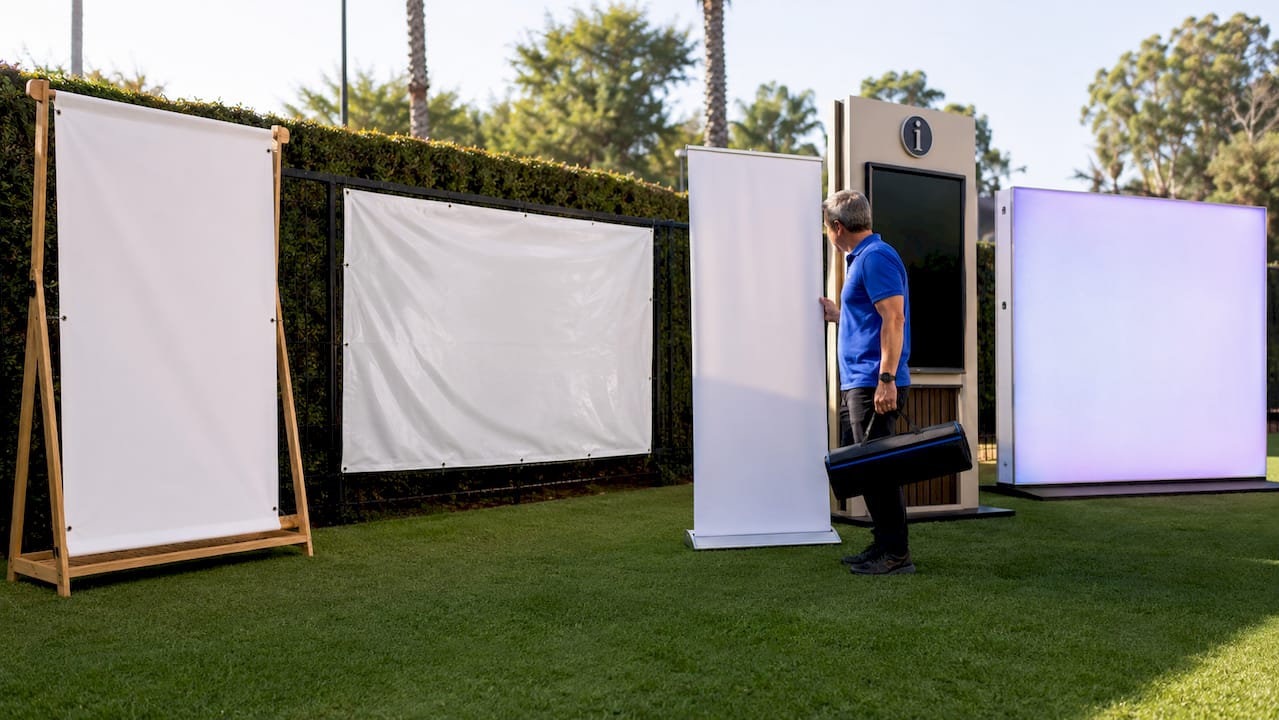
Fabric step and repeat banners are the go-to choice for indoor events that require a polished, upscale look. Fabric banners are lightweight, wrinkle-resistant, and easy to transport and store compared to vinyl. Corporate award nights, fashion shows, and charity galas favor fabric for its clean, photo-ready finish.
Vinyl step and repeat banners are the most widely used material across all event types. Vinyl is durable and weather-resistant, making it suitable for both indoor and outdoor applications at a lower cost per square foot than fabric. Trade shows, outdoor festivals, and grand openings rely on vinyl for its toughness and consistent color output.
Retractable step and repeat banners prioritize portability. Retractable banners roll into a base and pop up within seconds, requiring no tools and minimal setup time. They are ideal for traveling sales teams, pop-up events, and trade show exhibitors who move between venues frequently.
Digital and LED step and repeat displays represent the newest category. LED digital walls display animated logos, video content, and allow instant branding updates during events. Tech product launches and high-budget corporate events use them to create a dynamic visual experience that static banners cannot match.
Pro Tip: If you are ordering for the first time, start with a fabric or vinyl banner. Retractable and LED options add cost and complexity that only pay off at recurring or high-profile events.
2. Fabric step and repeat banners: the premium indoor choice
Fabric is the preferred material for events where photography quality matters most. The surface absorbs light evenly, which eliminates the glare that vinyl sometimes produces under flash photography. Award ceremonies, charity galas, and brand activations at hotels consistently use fabric for this reason.
The material is also practical for logistics. Fabric banners fold compactly, weigh less than vinyl equivalents, and arrive wrinkle-free when stored correctly. A standard 8x8 ft fabric backdrop fits in a carry-on bag, which matters for event teams flying between cities.
Printdrill produces custom fabric backdrops in full-color polyester with wrinkle-resistant finishes. These are printed using dye-sublimation, which bonds ink directly into the fabric fiber for sharp, fade-resistant graphics.
3. Vinyl step and repeat banners: durable and cost-effective
Vinyl is the workhorse of the step and repeat backdrop category. It handles outdoor conditions, resists moisture, and holds color well under direct sunlight. For events that run across multiple days or take place in unpredictable weather, vinyl is the practical default.
The cost advantage is real. Vinyl costs less per square foot than fabric and requires no special storage beyond rolling or folding. For businesses running frequent events on a tight budget, vinyl delivers consistent results without the premium price.
One drawback is glare. Vinyl reflects light under camera flash, which can wash out logos in photos. Matte vinyl finishes reduce this problem significantly and are worth the small added cost for photo-heavy events.
4. Retractable step and repeat banners: built for speed and travel
Retractable banners solve one specific problem: fast setup in unfamiliar venues. The banner graphic rolls into a protective base unit and extends upward on a pole in under a minute. No tools, no hardware, no crew required.
The trade-off is size. Retractable step and repeat displays are narrower than freestanding fabric or vinyl backdrops. Standard retractable units top out around 5–6 ft wide, which limits their use for group photos but works well for individual headshots or interview backdrops.
Printdrill offers portable retractable displays in multiple widths for event branding. These work well as secondary backdrops at trade show booths or as branded interview stations at press events.
5. Digital LED step and repeat walls: modern and dynamic
Digital and LED step and repeat displays appeal to tech events and product launches that need dynamic, modern visuals. They support animated logos and video content, which allows brands to rotate messaging in real time during an event. A product launch can show a countdown, then switch to a logo loop, then display a social media feed, all on the same screen.
The cost is significantly higher than any printed option. LED walls require technical setup, power access, and often a dedicated operator. They make sense for events with large production budgets where brand differentiation is the primary goal.
For most event planners, LED walls are a supplemental display rather than a replacement for printed backdrops. Many high-budget events use both: a printed fabric backdrop for the photo station and an LED wall for the main stage.
6. Grid vs. offset patterns: how step and repeat banner designs affect logo visibility
The two standard step and repeat banner designs are the grid pattern and the offset (brick) pattern. Choosing the right one directly affects how well your logo appears in photos.
| Pattern | Layout | Best Use Case |
|---|---|---|
| Grid | Logos aligned in even rows and columns | Formal events, symmetrical brand aesthetics |
| Offset (brick) | Every other row shifted horizontally | Red carpets, press events, group photos |
The offset pattern shifts every other row horizontally, so at least one logo is always visible behind a subject regardless of where they stand. The grid pattern aligns logos evenly, which looks clean but can result in a subject blocking an entire column of logos in photos.
For most press and media events, the offset pattern is the standard choice. The grid pattern works better for events where the backdrop is decorative rather than functional for media photography.
- Use the offset pattern for red carpets, press junkets, and award shows.
- Use the grid pattern for corporate headshot stations or branded photo booths.
- Keep logo sizes consistent across the pattern for a clean, professional result.
- Test your layout at actual print size before ordering, since logos that look balanced on screen can appear crowded at 8x8 ft.
Pro Tip: BrandWall Pro offers a free online step and repeat generator that lets you preview both grid and offset layouts before placing a print order. Use it to check logo spacing at your actual banner dimensions.
7. Standard sizes and what they mean for your event
Step and repeat banners are typically printed in standard sizes like 8x8 ft for individual photos or 8x20 ft for large red carpet events. The size you choose determines how many people can stand in front of the backdrop and how many logos appear in each shot.
An 8x8 ft banner fits one to three people comfortably. An 8x16 ft or 8x20 ft banner accommodates larger groups and is standard for high-traffic media events. For trade show booths, a 10x8 ft or 10x10 ft backdrop is common.
Printdrill’s trade show banner sizing guide covers the most common dimensions and helps planners match banner size to venue space and expected foot traffic.
8. Choosing the right banner type by event category
The right step and repeat backdrop type depends on the event format, venue, and how the display will be used after the event.
Corporate launches and press events call for fabric or high-resolution vinyl. The priority is photo quality and brand presentation. Fabric wins for indoor venues with professional lighting.
Trade shows and expos favor retractable banners and vinyl backdrops. Setup speed matters when you are building a booth in under an hour. Retractable units handle the interview station while a larger vinyl or fabric backdrop anchors the main display.
Outdoor festivals and markets require vinyl or mesh. Vinyl handles wind and moisture better than fabric. Mesh banners allow airflow, which reduces stress on the banner frame in open-air environments.
Red carpets and award events use large-format fabric or vinyl in offset patterns. The 8x20 ft size is standard for events with media photographers. Fabric is preferred when the event will be photographed under studio lighting.
9. Custom accessories that improve banner performance
Custom frames, lighting, and digital integrations enhance the impact and functionality of step and repeat banners. A quality frame keeps the banner taut and wrinkle-free throughout a long event. Lighting boosts logo visibility in dim venues.
The most useful accessories include:
- Adjustable aluminum frames: Hold fabric or vinyl banners flat without sagging. Telescoping designs accommodate multiple banner sizes.
- LED strip lighting: Mounted above the banner, these lights eliminate shadows and make logos pop in photos.
- Weighted base systems: Prevent the display from tipping in high-traffic areas or near air conditioning vents.
- Digital photo booth integration: Pairing a step and repeat backdrop with a photo booth station drives social media sharing and extends brand reach beyond the event.
Lighting is the most underused accessory in event branding. A well-lit backdrop produces sharper photos, which means your logo appears clearly in every image shared online after the event.
Key takeaways
The most effective step and repeat banner choice combines the right material, pattern, and size for the specific event format and venue conditions.
| Point | Details |
|---|---|
| Match material to venue | Use fabric indoors for photo quality; use vinyl outdoors for durability. |
| Choose offset over grid for media events | The offset pattern keeps at least one logo visible behind any subject in photos. |
| Size to your group | An 8x8 ft banner fits 1–3 people; use 8x20 ft for large red carpet groups. |
| Retractable for travel | Retractable banners set up in seconds and require no tools, ideal for mobile teams. |
| Add lighting for better photos | LED lighting above the backdrop sharpens logo visibility in every photo taken. |
What I have learned from years of event display decisions
The most common mistake event planners make is choosing a banner type based on price alone. Vinyl is cheaper than fabric, but it reflects flash photography in ways that blur logos in every photo posted after the event. That trade-off costs more in brand visibility than the savings on the print order.
The second mistake is ignoring setup time. A beautiful fabric backdrop that takes 45 minutes to assemble is a liability at a trade show where you have 90 minutes to build your entire booth. Retractable banners exist for exactly this reason. They are not the most impressive display, but they are ready before your competitors finish unpacking.
Digital LED walls get a lot of attention, but they are genuinely overkill for most events. The brands that use them well are running high-production activations with dedicated AV crews. For the average corporate event or trade show booth, a well-lit fabric backdrop with a clean offset logo pattern outperforms an LED wall on both cost and reliability.
My consistent recommendation is to start with a fabric or vinyl banner in the correct size for your venue, add a quality frame and basic lighting, and use the offset pattern for any event with media photographers. That combination covers 90% of event branding needs without overcomplicating the setup.
— Printdrill
Custom step and repeat banners from Printdrill
Printdrill produces custom fabric banners and vinyl backdrops in standard and custom sizes for events across the United States. Every order includes free design assistance and a digital proof before production begins.
For outdoor events or extended use, Printdrill’s custom mesh banners offer weather-resistant printing with airflow-friendly construction. The full product range covers fabric backdrops, vinyl displays, retractable stands, and complete event display kits. Orders ship nationwide with fast turnaround options available. Browse the step and repeat banner stand options to find the right frame and display combination for your next event.
FAQ
Q: What is a step and repeat banner?
A: A step and repeat banner is a large printed backdrop featuring logos or brand patterns repeated in a grid or offset layout. It is used at events so that branding appears in every photo taken in front of the display.
Q: What material is best for a step and repeat banner?
A: Fabric is best for indoor events where photo quality is the priority. Vinyl is the better choice for outdoor events or situations where budget and durability matter more than surface finish.
Q: What size step and repeat banner do I need?
A: An 8x8 ft banner works for individual or small group photos. Large red carpet events and media press lines typically use 8x20 ft banners to accommodate groups and multiple photographers.
Q: What is the difference between grid and offset patterns?
A: The grid pattern aligns logos in even rows and columns. The offset pattern shifts every other row horizontally, which keeps at least one logo visible behind any subject regardless of where they stand in front of the banner.
Q: Are retractable step and repeat banners worth it?
A: Retractable banners are worth it for teams that travel frequently or need fast setup. They are narrower than freestanding displays, so they work best as secondary backdrops or interview stations rather than main event photo walls.
Recommended
- Custom Step and Repeat Banners – Vinyl & Fabric Backdrops for Events – PRINTDRILL
- Step and Repeat Fabric Banner – Custom Backdrops for Events – PRINTDRILL
- Custom Step and Repeat Fabric Banner | Full-Color Polyester Backdrops – PRINTDRILL
- Order Custom Event Banners: A Pro Planner’s Guide – PRINTDRILL
