

The Role of Booth Lighting Displays in Trade Show Success
TL;DR:
- Proper booth lighting influences visitor behavior and builds perception of product quality before any interaction occurs.
- It guides visitor flow, increases dwell time, and enhances perceived value through strategic use of accent, ambient, and color temperature lighting.
Booth lighting is defined as the deliberate use of light sources to direct visitor attention, shape brand perception, and increase engagement within an exhibition space. The role of booth lighting displays goes far beyond decoration. Lighting is a sales tool. Visitors associate high-quality lighting with high-quality products, and that association happens before a single word is spoken. Industry standards like Color Rendering Index (CRI) 90+ exist precisely because accurate color rendering builds subconscious buyer confidence. A 60-second increase in dwell time from better lighting translates to 50 extra minutes of direct sales conversations across a three-day show. That is not a decoration budget. That is a revenue lever.
How does booth lighting influence visitor behavior and engagement?
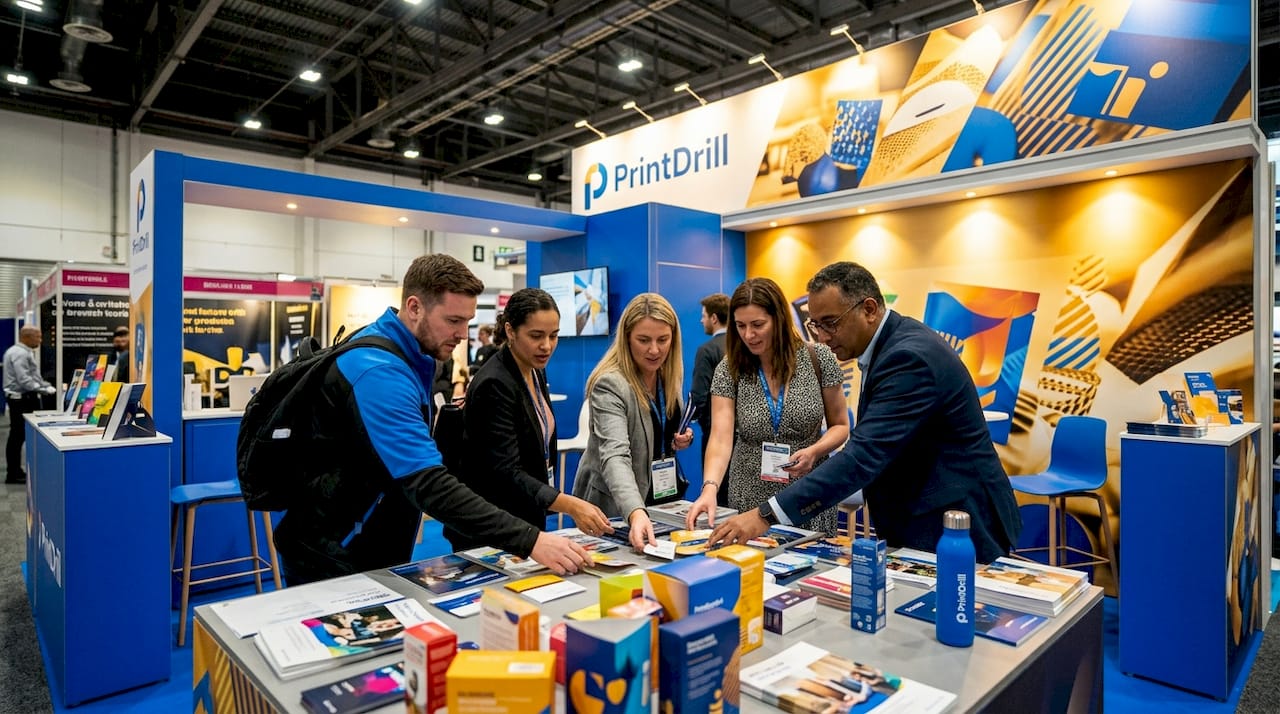
Lighting controls where visitors look and how long they stay. Accent lighting increases engagement by acting as a visual highlighter, pulling attention to specific products and creating a perception of higher value. Ambient lighting sets the overall mood of the space, making visitors feel either comfortable or on edge before they consciously register why.
The psychological effects are both conscious and subconscious. Warm tones promote comfort and invite visitors to slow down and browse. Cool tones signal innovation and precision, which works well for technology or medical products. Choosing the wrong tone for your product category creates a mismatch that visitors feel but cannot name, and they leave faster because of it.
Visitor flow inside the booth is also shaped by light placement. Brighter zones draw foot traffic naturally. A well-lit product display at the back of a booth pulls visitors deeper into the space, increasing the chance of a conversation. A poorly lit entrance, by contrast, signals that nothing inside is worth the effort.
LED lighting improves comfort in booths by running cooler than traditional halogen fixtures. Cooler booth temperatures keep visitors comfortable longer, which directly extends dwell time. Extended dwell time is the single most reliable predictor of sales conversations at trade shows.
- Accent lighting draws attention to hero products and raises perceived value.
- Ambient lighting sets the emotional tone of the entire space.
- Warm color temperatures (2700K–3000K) create a relaxed, inviting atmosphere.
- Cool color temperatures (5000K–6500K) communicate precision and modernity.
- LED fixtures reduce heat output and keep booth environments comfortable.
What are the key technical qualities and standards for effective booth lighting?
CRI 90+ is the industry standard for trade show lighting. CRI below 90 causes inaccurate color rendering, which introduces subconscious doubt in buyers evaluating products. A red product that looks orange under poor lighting loses credibility instantly. CRI 90+ eliminates that risk.
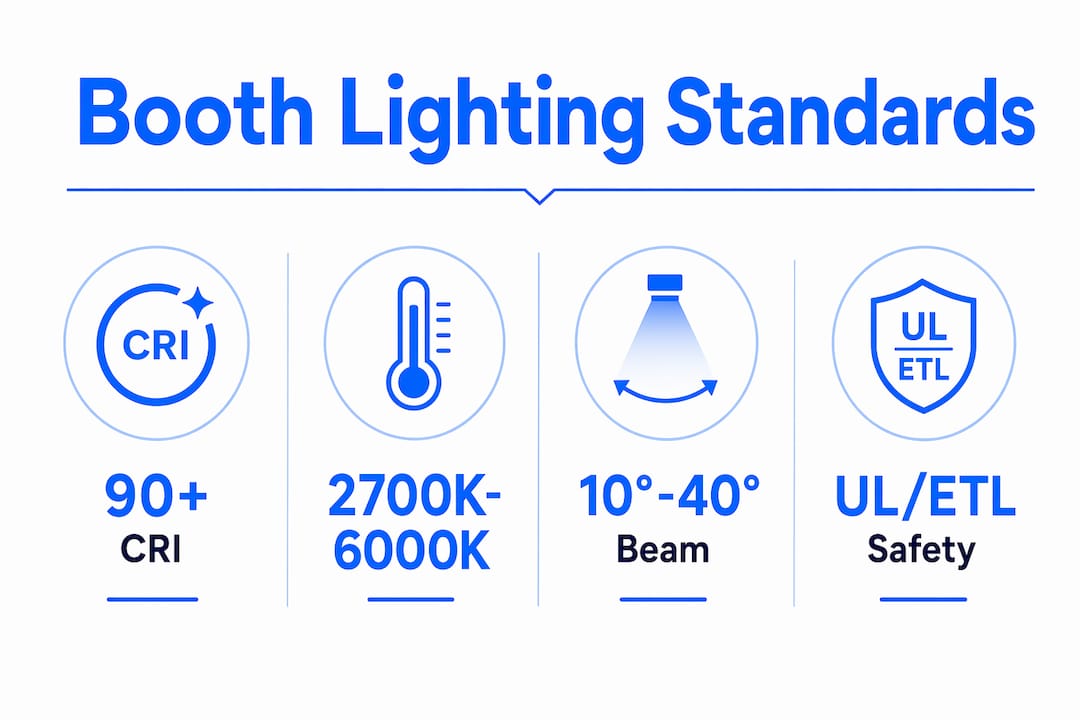
Color temperature selection is equally critical. The right temperature depends entirely on what you are selling.
| Product Category | Recommended Color Temperature | Effect |
|---|---|---|
| Food and luxury goods | 2700K–3000K (warm white) | Inviting, premium feel |
| Retail and fashion | 3000K–3500K (neutral warm) | Natural color accuracy |
| Technology and medical | 4000K–5000K (neutral to cool) | Clean, precise appearance |
| Industrial and automotive | 5000K–6000K (cool white) | High-contrast, clinical clarity |
Wrong color temperatures make products look dated or uninviting. A 6000K cool light on a luxury food product creates visual dissonance that deters visitors without them understanding why.
Beam angle determines how light spreads across a surface. Spot beams (10°–15°) concentrate light on a single product for dramatic emphasis. Narrow flood beams (25°–35°) cover a small display area. Wide flood beams (45°–60°) illuminate larger sections like backdrops or signage panels. Most booths benefit from a combination of all three.
Wattage should match booth size and venue ambient light levels. A 10x10 booth in a brightly lit convention hall needs more fixture output than the same booth in a dimly lit venue. Always check venue specifications before finalizing your lighting plan.
Certification matters for safety compliance. Look for UL or ETL listed fixtures. Most major convention centers require certified equipment, and non-compliant fixtures can be removed on-site.
Pro Tip: Bring a color swatch of your primary brand color to test under your chosen fixtures before the show. If the swatch looks off under your lights, your printed graphics will too.
What advanced booth lighting techniques optimize brand visibility?
Contrast is the most powerful tool in exhibit lighting design. Highlighting hero products while dimming non-essential areas guides visitors naturally toward your most important items. Even lighting distributed uniformly across a booth creates no focal point and no reason to stop. Contrast creates hierarchy, and hierarchy creates decisions.
The following techniques move booth lighting from functional to genuinely effective:
- Apply the 15-foot approach angle test. Walk 15 feet out into the aisle and look back at your booth. If no single element draws your eye immediately, your lighting has no focal point. Adjust until one product or graphic commands attention from that distance.
- Use contrast deliberately. Dim non-hero areas to 30–40% of your hero product brightness. The difference in intensity tells visitors exactly where to look.
- Match beam angles to display depth. Use spot beams on products sitting 3–5 feet from the fixture. Use wide flood beams on large fabric backdrops or tension displays.
- Install programmable lighting systems. Programmable and interactive lighting sustains visitor interest across a multi-day show by varying intensity and color over time. Static lighting becomes invisible after the first hour.
- Sync lighting with digital displays. Interactive lighting that responds to visitor movement or mirrors on-screen content creates a memorable experience that static setups cannot replicate.
- Avoid flat, even illumination. This is the most common mistake in booth lighting. Flat light removes depth, flattens graphics, and makes products look like shelf stock rather than featured items.
Pro Tip: Test your full lighting setup at home or in a warehouse before the show. Convention center setup time is limited, and discovering a beam angle problem on-site is expensive.
How to implement and evaluate booth lighting for trade shows
Planning starts with your booth layout and graphics. Lighting decisions made after the booth design is finalized often result in fixtures that fight the graphics rather than support them. Map your lighting plan at the same time you finalize your display layout.
Pre-show setup steps:
- Identify your one or two hero products and assign dedicated accent fixtures to each.
- Select color temperature based on your product category using the table above.
- Confirm all fixtures are UL or ETL certified before shipping to the venue.
- Pack extra bulbs, extension cords, and mounting hardware. Venues rarely supply these.
- Run the full setup at least once before the show to catch placement issues.
On-site evaluation:
- Perform the 15-foot approach angle test immediately after setup.
- Check that your booth graphics read clearly under your lighting without glare or color shift.
- Confirm that no fixture creates direct glare into visitor eye level.
- Walk the booth from multiple entry angles to verify the focal point holds from each direction.
Post-show measurement:
Tracking lighting effectiveness requires connecting it to observable outcomes. Count the number of visitors who entered the booth versus those who passed without stopping. Compare this rate across shows where you changed lighting setups. Track average conversation length as a proxy for dwell time. If your team logs leads per hour, compare that figure against shows with different lighting configurations.
The trade show booth checklist for 2026 includes lighting as a core preparation item, not an afterthought. Treat it the same way you treat graphics and messaging.
Key takeaways
Booth lighting is a direct sales tool. Proper lighting increases dwell time, guides visitor behavior, and raises perceived product quality before any conversation begins.
| Point | Details |
|---|---|
| CRI 90+ is the baseline standard | Lighting below CRI 90 distorts color and introduces subconscious buyer doubt. |
| Dwell time drives sales conversations | A 60-second dwell increase generates 50 extra minutes of sales time over a three-day show. |
| Contrast outperforms even illumination | Dimming non-hero areas while spotlighting key products creates visual hierarchy and guides visitors. |
| Color temperature must match product type | Mismatched temperatures create visual dissonance that deters visitors without a clear reason. |
| Test from the aisle before the show opens | The 15-foot approach angle test confirms your booth has a clear, visible focal point from the aisle. |
What most exhibitors get wrong about booth lighting
After working with exhibitors across dozens of trade shows, the pattern is consistent. Teams spend weeks perfecting their graphics and messaging, then treat lighting as a last-minute equipment rental. The result is a beautiful booth that nobody stops at.
The uncomfortable truth is that lighting decisions made 48 hours before a show almost always produce flat, even illumination. That is the default when there is no plan. Flat light removes depth from printed graphics, makes products look ordinary, and gives visitors no visual reason to slow down.
The exhibitors who consistently outperform their neighbors share one habit. They plan lighting at the same time they plan their display layout. They know which product gets the spot beam before they order the fixture. They have tested the approach angle in a parking lot or warehouse. They arrive at the venue with a plan, not a box of lights.
Lighting is also one of the most cost-effective investments in a booth. A well-chosen set of LED accent fixtures costs far less than a graphic redesign, yet the impact on visitor engagement is comparable. The trade show displays that drive brand growth are always the ones where lighting and graphics work together, not independently.
Treat lighting as equal to your graphics budget. Not secondary to it.
Printdrill displays built for booth lighting strategies
Lighting only works when your display surfaces are designed to receive it. Printdrill’s custom fabric banners and tension fabric displays are printed on materials that hold color accurately under CRI 90+ lighting, so your brand colors look exactly as intended on the show floor.
The 10x20 trade show booth kit is built for exhibitors who need a complete display solution that integrates cleanly with accent and ambient lighting setups. Printdrill also offers the SEG Lightbox Display, a backlit wall system that combines display graphics with built-in illumination for maximum visual impact. Free design assistance is included with every order, and fast nationwide shipping means your display arrives ready for setup.
FAQ
Q: What is the role of booth lighting displays at trade shows?
A: Booth lighting directs visitor attention, increases dwell time, and raises perceived product quality. It functions as a sales tool, not a decorative element.
Q: What CRI rating should trade show lighting meet?
A: CRI 90+ is the industry standard. Lighting below CRI 90 distorts product colors and reduces buyer confidence subconsciously.
Q: What color temperature works best for a trade show booth?
A: Color temperature depends on your product category. Warm white (2700K–3000K) suits food and luxury goods. Cool white (4000K–5000K) works for technology and medical products.
Q: How do I test my booth lighting before the show opens?
A: Walk 15 feet out into the aisle and look back at your booth. If no single product or graphic draws your eye immediately, your lighting lacks a focal point and needs adjustment.
Q: Does booth lighting affect sales results?
A: A 60-second increase in visitor dwell time from improved lighting produces 50 extra minutes of direct sales conversations over a three-day show, making lighting a measurable contributor to sales outcomes.
