

How to Evaluate Fabric Backdrop Print Suppliers
TL;DR:
- Assessing fabric backdrop print suppliers involves verifying fabric quality, fire compliance, print performance, and logistics to ensure durable, compliant, and visually consistent event displays. Proper evaluation prevents budget overruns, ensures venue compliance, and avoids last-minute issues during events. Key criteria include specialization in event fabrics, fire-retardant documentation, fabric durability, print quality, and reliable logistics.
Evaluating fabric backdrop print suppliers means assessing rental-grade fabric quality, fire compliance documentation, print performance, and logistical capabilities to source durable, compliant, and visually consistent event displays. A methodical approach to supplier assessment protects your event budget, keeps you compliant with venue requirements, and eliminates last-minute surprises on show day. For event planners and marketing professionals, the difference between a reliable supplier and a poor one shows up in color mismatches, failed fire inspections, and backdrops that look worn after a single use. Getting this right from the start saves real money and protects your brand on the floor.
What key criteria should you use to evaluate fabric backdrop print suppliers?
Assessing the full rental-grade system is the correct starting point, not just evaluating graphic output. A supplier’s specialization in event and rental fabrics signals whether they understand the specific demands of trade show environments, repeated setups, and venue compliance.
The core criteria to assess before comparing any suppliers:
- Specialization in event fabrics. Suppliers focused on event and trade show applications understand rental-grade performance requirements that general print shops do not.
- Fire-retardant documentation. NFPA 701 compliance is the primary U.S. standard for textiles in public spaces. Confirm the supplier provides current, fabric-specific test documentation.
- Fabric durability factors. Fiber strength, wrinkle resistance, opacity, and seam stability determine how a backdrop holds up across multiple events.
- Print quality metrics. Dye-sublimation printing delivers the sharpest color on fabric. Confirm the supplier uses it and can demonstrate color consistency across production runs.
- Logistics and lead times. A supplier who cannot fulfill orders reliably during peak event seasons creates production risk regardless of print quality.
- Dye-lot consistency. Color consistency failures occur when multiple SKUs come from different dye lots. This is a primary qualification criterion for any supplier serving live events.
Pro Tip: Request a sample order before committing to a full production run. Compare the sample against your brand color standards under the same lighting conditions you use at events.
How do fire-retardant certifications impact fabric backdrop supplier choice?

Fire-retardant compliance is not optional for indoor event fabrics. NFPA 701 is the primary U.S. fire-test standard for textiles used in public assembly spaces, and venues enforce it strictly. Suppliers who cannot provide current, fabric-specific test documentation create direct compliance risk for your events.
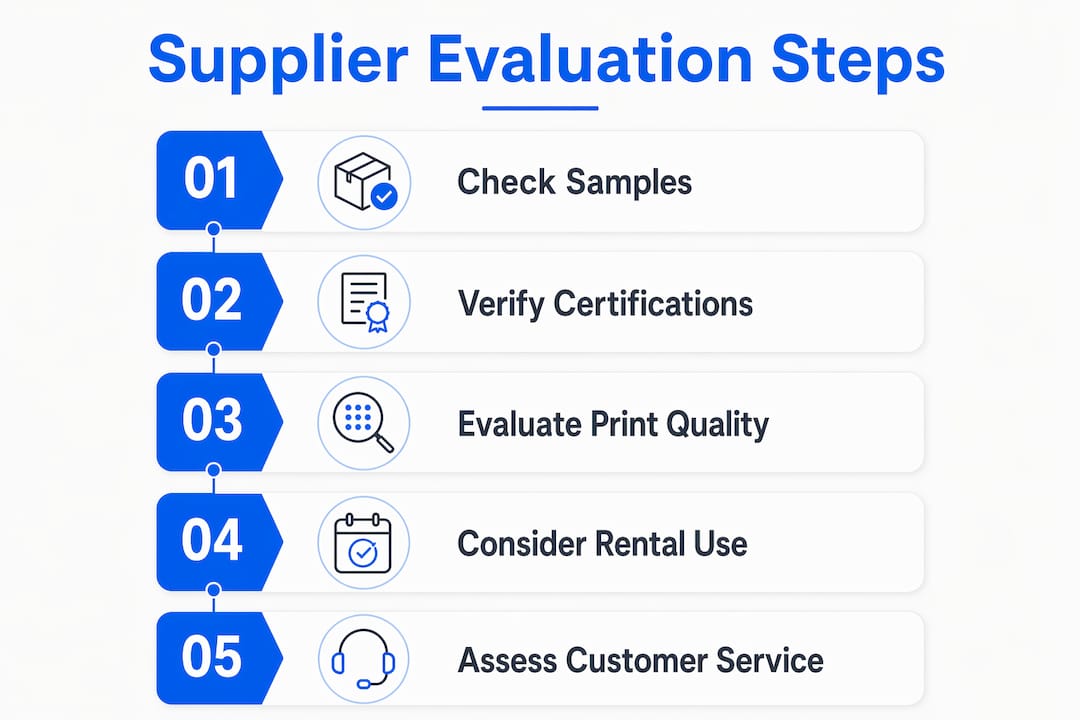
The distinction between fabric types matters significantly here. Inherently flame-retardant fabrics embed fire-resistant properties at the fiber level during manufacturing. Topically treated fabrics add fire-retardant chemicals after production. Treated fabrics can lose their effectiveness over time and through repeated laundering, which makes them a liability for rental inventory.
Key documentation steps when vetting any supplier:
- Request the actual NFPA 701 test report, not a general compliance statement.
- Confirm the test report corresponds to the exact fabric specimen you are ordering.
- Ask whether the fabric is inherently flame retardant or topically treated.
- Verify the certification date. Outdated or generic certifications fail public-assembly approvals.
Practitioners recommend confirming certification paperwork corresponds to the exact fabric specimens used at events. A general claim of “flame retardant” without specimen-specific documentation is not sufficient for venue compliance.
Reliable suppliers simplify this process by maintaining current documentation and clearly labeling each product’s FR classification. If a supplier cannot produce this paperwork quickly, that is a disqualifying signal.
What methods can you use to empirically evaluate fabric print quality?
Subjective feel is not a reliable evaluation method. Physical testing data produces objective comparisons across suppliers, and a structured evaluation matrix produces better purchasing decisions than visual impressions alone.
A practical step-by-step approach to fabric print quality evaluation:
- Build a supplier scorecard. Weight criteria including print quality, lead time reliability, minimum order quantity, landed pricing, and physical test results. Assign numeric scores to each.
- Request physical samples from each supplier. Order the same design from multiple suppliers and compare them side by side under consistent lighting.
- Check dye-lot consistency. Order samples from separate production runs and compare them. Dye-lot mismatches cause visible color inconsistencies that damage brand presentation at live events.
- Apply AATCC testing standards. AATCC TM135 measures dimensional stability after laundering. AATCC Test Method 8 measures color transfer under friction. Both are relevant for rental backdrops that get handled repeatedly.
- Evaluate minimum order quantities. A supplier with high MOQs creates cost risk for smaller event programs. Confirm MOQs align with your production volume before investing in samples.
| Evaluation Criterion | What to Measure | Why It Matters |
|---|---|---|
| Print method | Dye-sublimation vs. direct print | Dye-sub delivers sharper color on fabric |
| Dye-lot consistency | Color match across separate runs | Prevents visible mismatches at live events |
| AATCC TM135 result | Dimensional change after wash | Confirms fabric holds shape after laundering |
| AATCC Test Method 8 | Color transfer under friction | Indicates colorfastness during handling |
| Lead time reliability | On-time delivery rate | Protects event production schedules |
Pro Tip: Build your scorecard before you contact any supplier. Suppliers who know you are running a structured comparison tend to respond with more complete and accurate information.
How do rental and repeat-use factors affect supplier selection?
Rental-grade performance is a separate standard from single-use print quality. Rental-grade fabrics require fiber strength, opacity, wrinkle resistance, seam stability, and reliable performance after repeated laundering. A backdrop that looks sharp at its first event but wrinkles, fades, or loses seam integrity by the third use is not a viable rental asset.
Specific fabric types perform better in high-traffic rental applications. Soft Knit and Heavy Knit fabrics resist wrinkles and tears and maintain a smooth appearance across repeated setups. These are the fabric types to request when sourcing for trade show backdrops that will be packed, shipped, and installed multiple times per season.
| Fabric Type | Best Use | Key Advantage |
|---|---|---|
| Soft Knit | Portable pop-up displays | Lightweight, wrinkle-resistant |
| Heavy Knit | High-traffic trade show backdrops | Tear-resistant, edge-stable |
| Woven Polyester | Step and repeat banners | High opacity, color accuracy |
Additional factors that affect repeat-use performance:
- Edge stability. Poorly finished edges fray after repeated handling and reduce the backdrop’s lifespan.
- Finishing compatibility. Confirm the fabric works with your preferred mounting system, whether that is a tension fabric display, a pop-up frame, or a custom backdrop stand.
- Inventory depth. Suppliers with shallow inventory substitute fabrics when stock runs low. Substitutions break dye-lot consistency and create visual mismatches across your backdrop inventory.
A fabric pop-up backdrop designed for repeated event use demands a supplier who stocks consistent inventory year-round, not just during peak trade show season.
What logistical and customer service factors should influence your supplier choice?
Print quality means nothing if the backdrop does not arrive before your event. Inventory depth and scalable supply prevent substitutions and delays during high-demand seasons, and this is where many suppliers fail event professionals.
Logistics factors to evaluate directly with each supplier:
- Standard lead times. Confirm the supplier’s production and shipping timeline for your standard order volume. Compare it against your event production schedule.
- Rush order capability. Ask directly whether the supplier can fulfill emergency orders and what the cost premium is. A supplier with no rush option creates risk for any event program.
- Sample and return policies. A supplier who charges for samples or makes returns difficult is signaling low confidence in their product consistency.
- Inventory management. Ask how the supplier handles stock shortages. Substitutions without notification are a red flag.
- Support team knowledge. A support team that cannot answer technical questions about fabric specifications, fire compliance, or finishing options is not equipped to serve professional event buyers.
Pro Tip: Call the supplier’s support line before placing your first order. The speed and accuracy of their response tells you more about their operational reliability than any product description page.
Key Takeaways
Choosing the right fabric backdrop supplier requires verifying fire compliance documentation, confirming dye-lot consistency, and testing fabric durability under real rental conditions before committing to full production.
| Point | Details |
|---|---|
| Start with specialization | Confirm the supplier focuses on event and rental-grade fabrics before evaluating print quality. |
| Verify fire documentation | Request NFPA 701 test reports specific to the exact fabric specimen you are ordering. |
| Test dye-lot consistency | Order samples from separate production runs to catch color mismatches before live events. |
| Prioritize rental durability | Soft Knit and Heavy Knit fabrics outperform standard print fabrics in repeated-use applications. |
| Evaluate logistics directly | Confirm lead times, rush order capability, and inventory depth before your first production order. |
What I’ve learned from evaluating fabric backdrop suppliers
The most common mistake event planners make is treating supplier evaluation as a print quality exercise. Print aesthetics are the last thing to assess, not the first. Fire compliance documentation and rental durability determine whether a backdrop is usable at all. Color accuracy determines whether it represents your brand correctly. Print sharpness is the final layer, and it matters least if the other criteria fail.
Dye-lot consistency is the criterion most planners ignore until it costs them. Ordering the same SKU from the same supplier across two separate purchase orders can produce visible color differences if the supplier does not actively manage dye-lot control. This shows up as mismatched panels in a multi-section backdrop, and it is visible from across a trade show floor.
Build long-term relationships with suppliers who pass your initial evaluation. A supplier who knows your brand standards, your event calendar, and your volume requirements will perform better over time than a new vendor you source under deadline pressure. Run a formal performance review after each major event cycle. Score suppliers on delivery accuracy, color consistency, and fabric condition after use. Replace suppliers who consistently underperform, regardless of price.
Printdrill’s fabric backdrop and display solutions for event professionals
Event planners who need reliable, print-ready fabric backdrops and trade show displays can source directly from Printdrill, a U.S.-based custom signage company built for professional event and marketing applications.
Printdrill produces custom fabric banners using dye-sublimation printing on wrinkle-resistant, lightweight fabric designed for repeated event use. The product line includes tension fabric trade show booths, step and repeat backdrops, and pop-up displays built for fast setup and consistent visual performance. For planners sourcing a complete booth solution, the 10x20 tension fabric booth kit combines a full backdrop system with display racks and is available with fast nationwide shipping. Free design assistance is included with every order.
FAQ
Q: What is NFPA 701 and why does it matter for fabric backdrops?
A: NFPA 701 is the primary U.S. fire-test standard for textiles used in public assembly spaces. Venues require suppliers to provide current, fabric-specific NFPA 701 test documentation before allowing fabric backdrops on-site.
Q: What is the difference between inherently flame-retardant and treated fabric?
A: Inherently flame-retardant fabric embeds fire resistance at the fiber level and retains it through laundering. Topically treated fabric adds fire-retardant chemicals after production and can lose effectiveness over time and repeated washing.
Q: How do I compare fabric print suppliers objectively?
A: Use a scored evaluation matrix that weights print method, dye-lot consistency, AATCC test results, minimum order quantities, lead times, and landed pricing. Physical sample comparisons under consistent lighting conditions confirm what the scorecard suggests.
Q: What fabric types work best for trade show backdrops used repeatedly?
A: Soft Knit and Heavy Knit fabrics perform best in high-traffic rental applications. Both resist wrinkles and tears and maintain edge stability across multiple setups, packings, and shipments.
Q: How do I verify a supplier’s dye-lot consistency before committing?
A: Order samples from two separate production runs and compare them side by side. Color differences visible to the naked eye under standard lighting indicate the supplier does not actively manage dye-lot control.
