
Car Advertising Benefits: A Complete Guide to Mobile Branding
Table of Contents
- Introduction: Why Car Advertising Works
- Forms of Car Advertising
- Clear vs Opaque Cut-to-Shape Car Decals
- Vinyl Lettering & Window Decals
- Custom Car Flags for Mobility
- Visibility & Reach: Hard Data
- Cost-Effectiveness & ROI
- Comparison with Other Advertising Channels
- Design Principles for Effective Car Branding
- Real-World Use Cases
- Trends and Innovations
- Maintenance & Longevity
- DIY vs Professional Installation
- Legal, Licensing & Permits
- Tracking & Measuring Success
- Environmental & Sustainability Considerations
- Common Missteps & How to Avoid Them
- Final Takeaways & Action Plan
- FAQs
1. Introduction: Why Car Advertising Works
Every vehicle on the road is a mobile billboard, broadcasting your message to thousands daily. Unlike stationary billboards or expensive digital ads, car advertising engages an organic audience—pedestrians, commuters, shoppers—without ongoing media spend. With over 222 million licensed drivers in the U.S. and about 90% seeing branded vehicles daily, mobile advertising offers unmatched reach at a low cost.
2. Forms of Car Advertising
2.1 Clear vs Opaque Cut-to-Shape Car Decals
Car decals are precision-cut vinyl graphics adhered to auto surfaces. Clear Car Decals blend into windows or bodywork, offering a sleek, premium look. These are ideal for minimalist logos, domain names, or subtle branding.
In contrast, Opaque Car Decals provide vivid, full-color visibility—perfect for vehicle hoods, doors, or bumper ads where eye-catching designs are essential.
| Feature | Clear Decals | Opaque Decals |
|---|---|---|
| Finish | Discreet/glassy | Bold/solid |
| Best Placement | Windows, edges | Doors, panels |
| Print Visibility | Good at close range | Excellent even at speed |
| Design Flexibility | Limited to high contrast | Full-color, complex imagery |
2.2 Vinyl Lettering & Custom Window Decals
Custom Vinyl Lettering transforms everyday vehicles into branded signage with simply styled text—great for names, phone numbers, or offers. It’s lightweight, affordable, and crisp.
Custom Window Decals, often printed with layered graphics or perforated film, transform rear or side windows without obstructing driver visibility. Both are highly custom—and removable.
2.3 Custom Car Flags
Car flags—mounted on windows or mirror clips—offer bold, fluttering movement that captures attention at events, parades, or protests. Light, inexpensive, and easy to swap out seasonally, they're highly effective for high-impact mobile messaging.
3. Visibility & Reach: Hard Data
Studies show a single branded vehicle can generate 30,000–70,000 daily impressions.
- Brand recall is stronger when designs incorporate logos, contact info, or QR codes.
- Mobile ads reach demographics often missed by digital marketing—pedestrians, public-transit riders, and secondary market buyers.
4. Cost-Effectiveness & ROI
Car ads typically cost $200–$800 including design and installation, with a lifespan of 3–5 years. Compared to billboards or paid digital ads, they deliver one-time cost for ongoing exposure. Estimated cost per impression (CPI) often under $0.01, compared to $2–$10 per click in digital ads.
5. Comparison with Other Advertising Channels
| Channel | Reach/Day | Cost | Engagement Type | Ideal For |
|---|---|---|---|---|
| Car Decals/Flags | 30k–70k | $200–800 | Passive high-frequency | Local businesses, service providers |
| Digital Ads (CPC) | Varies | $2–10 CPM | Targeted clicks | Online retail, e-commerce |
| Billboards | 10k–50k | $1k+/month | Visual curb appeal | Brand awareness, promos |
| Radio / Streaming Ads | Thousands | $500+/mo | Audio engagement | Brands targeting commuters |
6. Design Principles for Effective Car Branding
- Clarity Over Creativity: Bold fonts, simple logos
- Contrast is Key: Light text on dark backgrounds
- Keep It Concise: 5‑7 words or phone numbers
- Include a Call-to‑Action: “Call now” or QR code
- Balance: Avoid clutter; test alignment from afar
7. Real‑World Use Cases
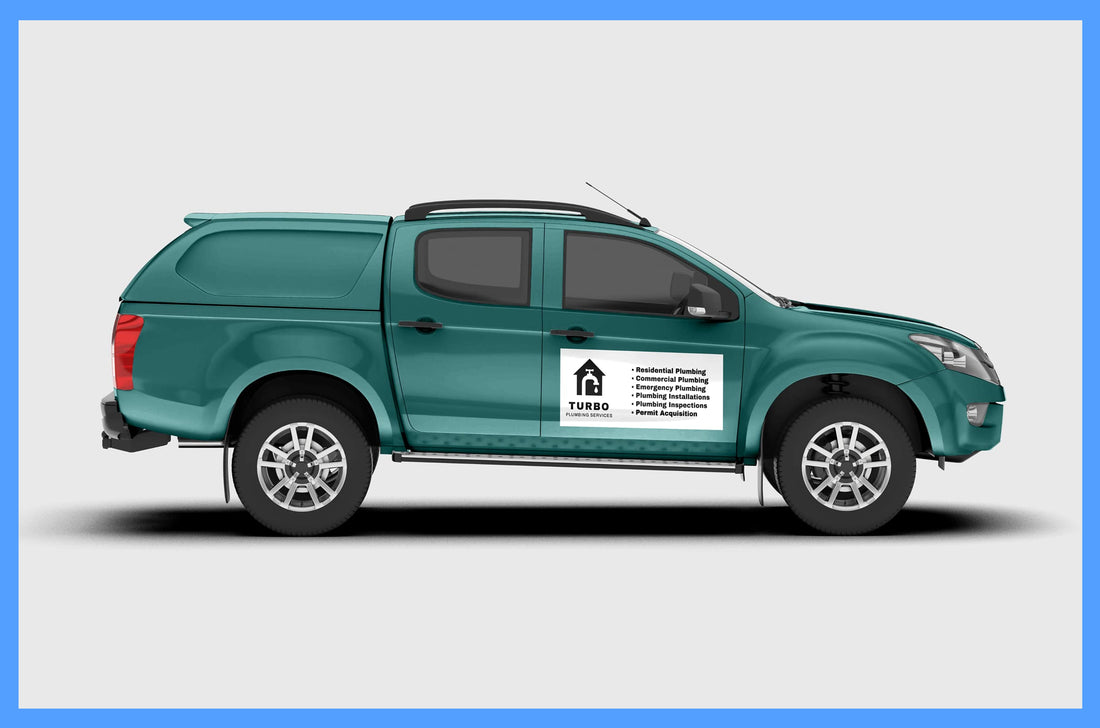
- Plumbing & HVAC Services: Trucks wrapped with services & contact details generate inbound calls daily.
- Food Carts & Catering: Delivery vans double as roaming ads in neighborhoods.
- University Recruitment: Campus shuttles with custom flags and window decals promote open enrollment.
- Nonprofits & Campaigns: Car flags during parades and decals delivering high visibility to raise awareness.

8. Trends & Innovations
- Digital-Ready Wraps: Decals with QR codes for instant interaction
- AR-enabled designs: Scan vehicle graphics for immersive experiences
- Eco-friendly Materials: PVC-free vinyl, paper-based adhesives
- Smart Tracking: Pair decals with UTM-coded QR for ROI analytics
9. Maintenance & Longevity
With car decals or vinyl lettering, longevity is key:
- Avoid automatic car washes with brushes
- Clean with gentle soap & microfiber cloths
- Protect from sun and bird droppings
Expect fade within 4–5 years if untreated—longer when UV-protective laminate is used.
10. DIY vs Professional Install
DIY kits use low‑tac adhesives and cost under $100—but risk air bubbles, misalignment, and warping.
Certified installers ensure perfect wraps, edge sealing, and removal-ready finishes.
11. Legal & Permits
Most public roads allow decals under certain size limits. Municipalities may restrict certain messaging (e.g., political ads). Always verify local regulations.
12. Measuring Advertising Success
Track effectiveness via:
- Unique phone numbers for vehicles
- QR codes and URL redirects
- Surveys: “Did you see our van?”
- Sales correlation with wrapped-vehicle audiences
13. Sustainability & Eco Impact
- PVC-free alternatives reduce plastic waste
- Recyclable adhesives and biodegradable decals are emerging
- Vinyl wraps can be reused or recycled responsibly
14. Common Mistakes & Avoidance
- Overcrowded graphics that blur in motion
- Faded colors without protective coating
- Poor installation that leads to peeling
Fix by focusing on contrast, UV laminate, and hiring pros.
15. Your Car Advertising Action Plan
- Define goals: brand awareness vs direct leads
- Choose format: decals + flags or full wraps?
- Use (or ask for) PrintDrill’s free design service
- Invest in durable materials with UV laminate
- Track progress with codes or analytics
- Refresh designs every few years
16. FAQ on Car Advertising
Q: Are car decals permanent?
A: Car decals with quality adhesive last 3–5 years but can be removed professionally.
Q: Do decals damage paint?
A: No, if installed/removed correctly. Clear protective layers help.
Q: What about insurance?
A: Full wraps may need notification to insurance for re-appraisal.
Q: Should I wrap the whole vehicle?
A: Partial or door-panel branding is often more cost-effective for local exposure.
Q: Is car decal advertising legit?
A: Yes—car decal advertising is a recognized marketing method. Companies partner with drivers to display their brand logos or ads on vehicles in exchange for compensation. This form of outdoor mobile advertising is commonly used by brands and ad agencies. Legitimate programs are typically transparent about payment, duration, and branding guidelines. Always verify a company's credentials and read contracts carefully.
Q: How to get paid using decal car advertisement?
A: To earn with car decal ads, follow these steps:
- Find reputable advertising agencies or platforms (e.g., Wrapify, Carvertise).
- Submit your vehicle details, city, and mileage.
- Pass a vehicle check (clean, good condition), and sign a contract.
- Have the decal installed professionally.
- Get paid per mile, month, or campaign—payments vary based on routes and impressions.
Pro Tip: Higher mileage and routes in busy metro areas can significantly increase compensation.
Q: How much do you get paid to put a decal advertisement on your car?
A: Payment typically ranges from $100 to $400 per month, depending on your route and drive frequency.
Here’s a comparative breakdown:
| Mileage/Traffic Level | Typical Monthly Earnings |
|---|---|
| 5,000–10,000 miles/month | $100–$200 |
| 10,000–20,000 miles/month | $200–$300 |
| Over 20,000 miles/month | $300–$400+ |
Top earners who drive daily in busy urban areas can approach the higher end.
Q: Are car decal advertising jobs a scam?
A: Most programs are legitimate when run by established companies like Wrapify or Carvertise. However, be wary of offers requiring upfront fees or training costs—red flags indicating potential scams. Always request a written agreement, and check online reviews or BBB ratings before agreeing. No legit agency should ask you to pay to join their program.
Q: Are car decals under the category of campaign advertising?
A: Yes, car decals are often used for campaign and political advertising. They're an effective way to display candidate logos, slogans, or issue messaging. Because they travel, these decals increase brand/ candidate visibility at events, door-to-door canvassing, and commuter routes. Check local regulations—some areas require permit filings for political decals on vehicles.
Q: Who owns car decal advertising?
A: Typically, ad agencies or brand sponsors retain ownership of the decals and campaign content. The driver pays no purchase cost; they simply provide their vehicle and time. Once the campaign ends, you return the decal—ownership remains with the advertiser who may reuse or repurpose it.
Q: Can you deduct car payment as advertising if you have a decal?
A: Yes, under U.S. tax law, self-employed individuals can potentially deduct a portion of car expenses, including payments, insurance, and fuel—if they can prove the car is used for advertising (i.e., displaying decals and driving for promotion). It's recommended you track mileage and consult a tax professional to file correctly.
Q: How big is the car decal for an advertising agency?
A: Most ad decals measure between 2×2 feet and 4×6 feet, fitting doors or back windows. Overlay decals may follow side-panel contours, while partial wraps range widely. Standard dimensions optimize visibility without blocking driver views or violating vehicle safety regulations. Agencies often specify size limits in contracts.
Q: Do brands like AMP or Miller Lite pay to advertise on car decals?
A: Yes, brands like AMP Energy or Miller Lite occasionally sponsor branded vehicle programs. Payments vary—AMP may offer smaller stipends; Miller Lite typically partners with marketing agencies for larger campaigns. Compensation depends on campaign reach, mileage, and brand budget. Quantity and quality of impressions are key factors.
Q: How much are people generally paid to put an advertising decal on their car?
A: Most owners earn between $100 to $400 monthly. Some high-traffic routes or full-vehicle wraps can exceed this, offering up to $500–$600 per month. Exact amounts depend on factors like city density, driving frequency, and campaign duration.
Q: How much do you make if you put advertising decal on the back of your car window?
A: Back-window decals offer more limited visibility—drivers may earn $50–$150 per month, sometimes less. Rates increase with the decal's size and legibility. Combining window decals with door or side-panel stickers can boost earnings significantly.
Q: How to get paid to advertise with car decals?
A:
- Sign up with reputable agencies.
- Share your route, vehicle type, and mileage.
- Pass their vehicle inspection.
- Install decals professionally.
- Receive payments based on mileage or impressions (monthly electronically).
💡Pro Tip: Pair decal campaigns with gig-driving (Uber, Doordash) to increase impressions and rates.
Q: How to create car advertising decals?
A: For DIY or vendor projects: choose high-contrast colors, prioritize legible fonts, use 300 DPI image resolution, and measure panel dimensions accurately. PrintDrill offers cut-to-shape decals, making logo creation and vehicle fit seamless.
Q: Do vinyl car decal ads get damaged in car washes?
A: They can—brush-style car washes may lift edges, especially without edge-sealing.
Pro Tip: Use touchless car washes or hand wash with microfiber and mild soap. Dry thoroughly to prevent water under edges.
Q: What is a good font to use for vinyl car advertising decals?
A: Go for bold sans-serif fonts like Helvetica Bold, Futura Condensed, or Arial Black. These fonts maintain legibility even at a distance and in motion. Aim for stroke widths of at least 2″ for side-panel decals and 1–1.5″ for rear-window text.
