

Acrylic vs Aluminum Signs: Which Material Wins?
TL;DR:
- Aluminum signs are more durable and resistant to environmental damage than acrylic signs. Acrylic signs offer superior visual clarity and are ideal for indoor displays, while aluminum is better suited for outdoor environments. Choosing the correct material depends on the sign’s location, exposure, and branding needs.
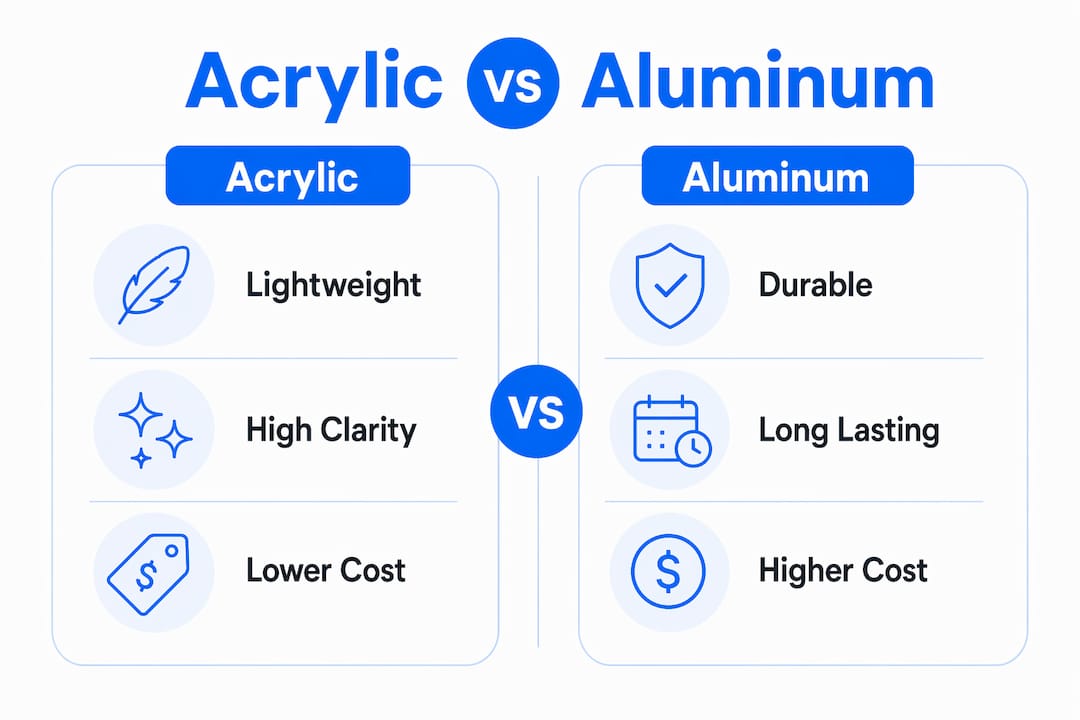
The core difference between acrylic and aluminum signs is durability versus visual clarity. Acrylic is a lightweight thermoplastic that delivers glass-like transparency and vibrant color depth, making it the standard choice for upscale indoor displays. Aluminum is a metal with a natural oxide layer that resists corrosion, dents, and UV degradation, making it the dominant material for outdoor and industrial signage. Understanding the difference acrylic vs aluminum signs make in real-world conditions, from a busy retail lobby to a coastal parking lot, is what separates a smart signage investment from a costly replacement cycle.
What are the material properties of acrylic and aluminum signs?
Acrylic, also called polymethyl methacrylate (PMMA), is a rigid thermoplastic with a tensile strength of 70 MPa. That number means acrylic handles moderate physical stress well but will crack or shatter under sharp impact. Its defining advantage is optical: acrylic achieves 92% visible light transmission, which is higher than standard glass. That clarity makes colors appear vivid and backlighting effects look sharp.
Aluminum carries a tensile strength of 250 MPa, more than three times that of acrylic. That gap in raw strength translates directly into fewer replacements and longer service life. Aluminum also forms a natural oxide layer on its surface that blocks moisture and corrosion without any coating treatment. This property makes it especially reliable in coastal, industrial, and high-humidity environments.
| Property | Acrylic | Aluminum |
|---|---|---|
| Tensile strength | 70 MPa | 250 MPa |
| Visible light transmission | 92% | Opaque |
| UV degradation rate | 2.1% per year | 0.3% per year |
| Corrosion resistance | Low | High (natural oxide layer) |
| Weight | Light | Moderate |
| Finish options | Matte, frosted, glossy, colored | Brushed, anodized, painted |
Pro Tip: If your sign will be backlit or layered with dimensional lettering, acrylic is the only material that transmits light cleanly. Aluminum blocks light entirely and is not suitable for illuminated sign faces.
How do acrylic and aluminum signs differ in durability and longevity?
Aluminum outlasts acrylic in almost every outdoor setting. UV degradation hits acrylic at 2.1% per year versus just 0.3% per year for aluminum. Over five years outdoors, that difference compounds into visible yellowing, surface crazing, and color fade on acrylic signs while aluminum signs remain structurally and visually intact.
Acrylic’s brittleness is its biggest liability in high-traffic areas. Surface scratches and clouding accumulate quickly when signs are touched, cleaned repeatedly, or exposed to airborne debris. Busy commercial environments typically require acrylic signs to be refinished or fully replaced every 12–18 months. That replacement cycle adds up fast for businesses with multiple sign locations.
Aluminum behaves differently under stress. It may dent under a hard impact, but it does not shatter, crack, or cloud. Its natural oxide layer provides long-term corrosion defense without requiring sealant reapplication. Businesses using aluminum for outdoor wayfinding or building identification signs typically see service lives measured in years rather than months.
Durability comparison at a glance:
- Acrylic pros: Lightweight, easy to cut and shape, excellent for indoor protected environments
- Acrylic cons: Scratches easily, yellows under UV, brittle under impact, short replacement cycle outdoors
- Aluminum pros: High tensile strength, corrosion resistant, UV stable, long service life
- Aluminum cons: Heavier than acrylic, opaque (no backlighting), higher upfront cost
Pro Tip: For outdoor signs in coastal cities like Miami or San Francisco, aluminum is the only practical choice. Salt air accelerates acrylic degradation and will cloud a sign within months.
What are the aesthetic and branding considerations?
Acrylic’s optical clarity is its strongest branding asset. The material’s 92% light transmission makes it the go-to choice for illuminated lobby signs, dimensional lettering, and layered displays where depth and glow matter. Law firms, medical offices, hotels, and retail boutiques consistently choose acrylic because it reads as premium and polished. The material also supports multiple finish options including matte, frosted, glossy, and tinted color sheets, giving designers precise control over the final look.
Aluminum projects a different kind of authority. Its metal surface communicates permanence and professionalism without relying on visual effects. Brushed aluminum finishes work well for corporate building directories, real estate signage, and industrial facility markers where a clean, no-nonsense appearance is the goal. Anodized and painted aluminum surfaces hold color well outdoors and resist fading far longer than printed acrylic.
The choice between the two materials also shapes how customers perceive your brand at first contact. Acrylic signs in a reception area signal attention to design detail. Aluminum signs on a building exterior signal reliability and stability. Neither material is universally superior on aesthetics. The right choice depends on where the sign lives and what impression you need it to make.
Best aesthetic applications by material:
- Acrylic: Reception signs, directional signs in offices, illuminated retail displays, menu boards, award plaques
- Aluminum: Outdoor building identification, parking and wayfinding signs, real estate yard signs, construction site signs, facility nameplates
How do cost and installation factors affect the choice?
Aluminum costs significantly more upfront. Metal signs run 60–80% more per square foot than acrylic signs due to material cost and fabrication complexity. For a business ordering a single sign, that premium is noticeable. For a business ordering a full suite of outdoor signage, the cost gap is substantial.
Acrylic offsets its lower material cost with higher maintenance expenses over time. Acrylic signage is approximately 20–25% more time-consuming to maintain due to frequent cleaning and refurbishing needs. When you factor in labor and replacement costs over a three-year period, the total cost of ownership for acrylic in outdoor settings often exceeds that of aluminum.
| Cost factor | Acrylic | Aluminum |
|---|---|---|
| Material cost per sq ft | Lower | 60–80% higher |
| Shipping cost | 15–20% less than aluminum | Higher due to weight |
| Maintenance frequency | High (every 12–18 months) | Low |
| Installation hardware | Standard fixings | Stronger fixings required |
| Total cost of ownership (outdoor, 3 years) | Higher | Lower |
Installation logistics also differ. Acrylic ships at 15–20% lower freight costs than aluminum due to its lighter weight, which simplifies indoor installation. Aluminum requires stronger mounting hardware and more secure fixing points, but once installed, it delivers superior long-term stability with minimal follow-up work.
What are the best use cases for each sign material?
The right material depends on three factors: location, traffic level, and branding priority. Acrylic performs best in controlled indoor environments where it is protected from direct weather and physical impact. Aluminum performs best anywhere it faces sun, rain, wind, or repeated physical contact.
Acrylic signs work best for:
- Corporate lobby and reception displays
- Directional signs inside office buildings, hospitals, and hotels
- Illuminated or backlit sign faces
- Award plaques and recognition displays
- Retail interior branding and product displays
Aluminum signs work best for:
- Outdoor building identification and address signs
- Real estate and construction site signage
- Parking lot and wayfinding markers
- Industrial facility signs
- Outdoor small business storefront signs in high-UV or coastal climates
Mixed-material solutions are also practical. A business might use aluminum for its exterior building sign and acrylic for its interior reception display. This approach matches each material to the environment where it performs best, rather than forcing one material to cover every application.
Climate is a deciding factor that business owners often underestimate. High-humidity regions accelerate acrylic clouding. Extreme cold makes acrylic more brittle and prone to cracking. Aluminum handles both conditions without performance loss. If your sign will face seasonal temperature swings or consistent moisture exposure, aluminum is the lower-risk choice.
Pro Tip: When ordering signage for a new location, map each sign by its environment first. Indoor, protected, and decorative signs are good candidates for acrylic. Anything facing weather, direct sun, or physical contact belongs on aluminum.
Key Takeaways
Aluminum is the stronger, longer-lasting material for outdoor signage, while acrylic delivers superior visual clarity and finish options for indoor branding applications.
| Point | Details |
|---|---|
| Strength gap is significant | Aluminum’s 250 MPa tensile strength is more than three times acrylic’s 70 MPa. |
| UV degradation favors aluminum | Acrylic degrades at 2.1% per year outdoors versus 0.3% per year for aluminum. |
| Acrylic costs less upfront | Aluminum runs 60–80% more per square foot, but aluminum’s lower maintenance offsets this over time. |
| Acrylic excels indoors | Its 92% light transmission makes it ideal for illuminated and layered interior displays. |
| Match material to environment | Use acrylic for protected indoor signs and aluminum for any outdoor or high-traffic application. |
What I’ve learned after seeing hundreds of signage decisions go wrong
The most common mistake business owners make is choosing acrylic for outdoor use because it looks better in the product photo. Acrylic does photograph beautifully. It also clouds, yellows, and scratches within a year when placed in direct sun or a high-traffic entry. The replacement cost is rarely budgeted for, and it always arrives as a surprise.
The second most common mistake is choosing aluminum for every application to avoid that problem. Aluminum is the right call outdoors, but it is a poor fit for interior branding where visual impact matters. A brushed aluminum reception sign in a design-forward office reads as an afterthought. Acrylic with dimensional lettering in the same space reads as intentional and professional.
The decision framework is straightforward. Ask where the sign lives, how much physical contact it will face, and whether backlighting or color depth is part of the design. Those three questions eliminate most of the uncertainty. Budget is a secondary consideration. Choosing the wrong material to save money upfront almost always costs more within 24 months.
One trend worth watching is the growth of aluminum composite material (ACM) panels, which combine an aluminum face with a lightweight core. ACM panels are covered in detail in Printdrill’s aluminum composite sign guide. They offer outdoor durability at a lower weight than solid aluminum, which can reduce both shipping and installation costs for large-format signs.
— Printdrill
Printdrill’s acrylic and aluminum sign options
Printdrill produces both acrylic and aluminum signs for businesses across the United States, with free design assistance and fast turnaround on every order.

For outdoor applications, Printdrill’s metal A-frame signs deliver aluminum durability in a portable, street-ready format that works for retail storefronts, restaurants, and event spaces. For interior branding, Printdrill’s custom acrylic signs are available in multiple finishes and sizes, with glass-like clarity that holds up in lobbies, offices, and retail displays. Upload your artwork, request a digital proof, and receive your sign delivered directly to your location. No minimum order required.
FAQ
Q: What is the main difference between acrylic and aluminum signs?
A: Acrylic provides glass-like clarity and vibrant color depth suited for indoor displays, while aluminum offers superior strength and weather resistance for outdoor use. The core trade-off is visual appeal versus long-term durability.
Q: Which sign material lasts longer outdoors?
A: Aluminum lasts significantly longer outdoors. It degrades at just 0.3% per year from UV exposure compared to 2.1% per year for acrylic, and its natural oxide layer resists corrosion without additional treatment.
Q: How often do acrylic signs need to be replaced?
A: In busy commercial environments, acrylic signs typically require refinishing or replacement every 12–18 months due to surface scratching and clouding. Aluminum signs in the same conditions last several years without replacement.
Q: Are aluminum signs more expensive than acrylic?
A: Aluminum signs cost 60–80% more per square foot upfront. However, their lower maintenance requirements and longer service life make them less expensive than acrylic over a three-year period in outdoor settings.
Q: Can acrylic signs be used outdoors?
A: Acrylic can be used outdoors in sheltered or low-UV environments, but it is not recommended for direct sun or coastal climates. UV exposure causes yellowing and surface crazing that shortens the sign’s useful life significantly.
